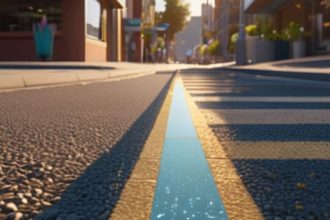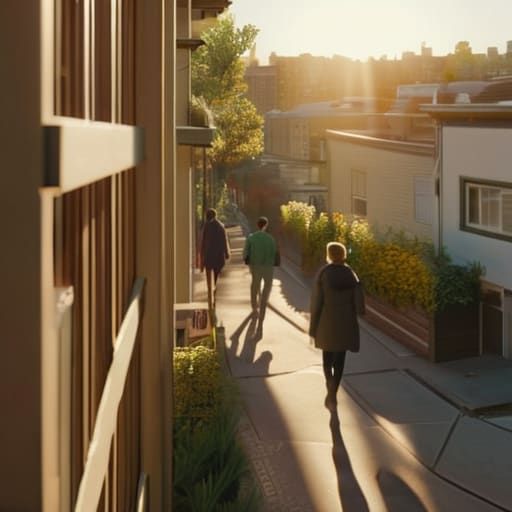
I was rummaging through a box of old electronics last weekend—the kind of dusty, nostalgic treasure hunt that usually ends with me staring at a cracked Sony Walkman—when I realized how much our physical surroundings function like those old analog circuits. We often fall into the trap of believing that our social circles are purely a matter of personal choice or algorithmic luck, but that’s a sanitized myth that ignores the grit of reality. The truth is far more tactile: how neighbourhoods shape who you know is less about “networking” and more about the invisible, architectural currents that dictate our daily collisions. It’s the local coffee shop acting as a low-frequency transmitter, or the specific layout of a sidewalk that either invites a conversation or enforces a silent, hurried isolation.
I’m not here to give you a polished, LinkedIn-style lecture on urban planning or social capital. Instead, I want to pull back the curtain on the unseen mechanics of our local ecosystems. Drawing from my time studying digital anthropology and my own messy transitions between midwestern towns and urban hubs, I’ll show you how to navigate the social topography of your own streets. We’re going to look at how to turn your physical coordinates into meaningful connections, without the usual academic jargon or empty hype.
Geographic Proximity and Friendship Formation in Modern Life
I was rummaging through my desk drawer the other day—a chaotic sort of digital archaeology—and stumbled upon my old Sony Walkman. It’s a heavy, tactile little thing, and it got me thinking about how we used to “tune in” to our surroundings. Back then, your social radius was dictated by the physical distance you could walk or bike. Today, even with our hyper-connected digital lives, geographic proximity and friendship formation still follow a remarkably analog logic. We tend to bond with those who share our immediate atmosphere, creating a sort of organic, localized network that mirrors the way a radio signal weakens as you move away from the transmitter.
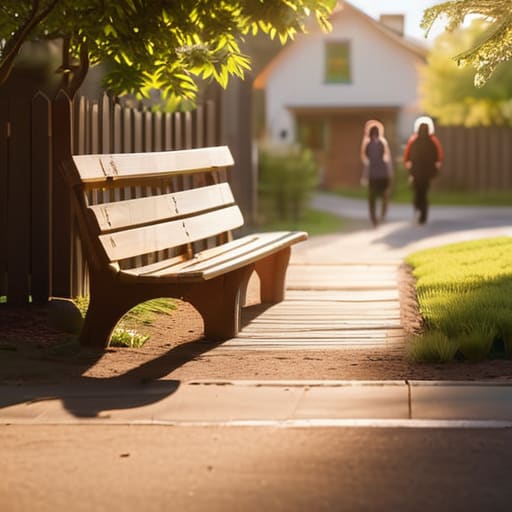
This isn’t just about convenience; it’s about the structural blueprints of our lives. I often find myself pondering the impact of urban design on social interaction—how a well-placed park bench or a walkable corner cafe acts as a physical node for human connection. When our environments are designed for movement and chance encounters, we build a reservoir of social capital and community ties almost by accident. We aren’t just living near people; we are being subtly programmed by our streets to weave ourselves into a collective tapestry.
The Impact of Urban Design on Social Interaction
If I were to look at a city through the lens of an old circuit board, the streets and plazas would be the conductive traces, determining exactly where the “current” of human connection can flow. It’s not just about being near people; it’s about the architecture of the encounter. I often think about how the impact of urban design on social interaction mirrors the difference between a cluttered, tangled mess of wires and a sleek, intuitive interface. When a city is built with wide sidewalks, accessible parks, and inviting plazas, it creates a low-friction environment for spontaneous connection. Without these intentional spaces, our social circuits remain stubbornly open, unable to close the loop of meaningful interaction.
This is where the concept of “third places”—those cozy cafes, public libraries, or even a well-placed community garden—becomes vital. These aren’t just physical locations; they are the essential nodes that facilitate social capital and community ties. Just as a vintage pager once served as a tiny, singular lifeline to the outside world, these spaces act as our modern anchors, preventing us from drifting into digital isolation. When urban design prioritizes these communal hubs, it effectively builds the “hardware” necessary for a resilient, interconnected social fabric.
Calibrating Your Social Antenna: 5 Ways to Navigate Your Local Network
- Seek out the “Third Places.” Just as a vintage Walkman needs headphones to create an intimate space, you need those neutral ground spots—the corner café, the community garden, or the local bookstore—to act as the interface between your private life and the public sphere.
- Embrace the “Micro-Interaction.” Don’t underestimate the power of a brief nod to the person who sells you your morning sourdough. These low-stakes, analog exchanges are the precursor to deeper social bandwidth; they are the handshake protocols of a healthy neighborhood.
- Audit Your Physical Pathing. If your daily routine is a closed loop, your social circle likely is too. Try a different route to the subway or a new grocery store; changing your physical trajectory is like switching from a monochrome display to full color—it reveals layers of your community you previously ignored.
- Leverage Local Digital Hubs with Intention. Treat neighborhood apps and forums like a well-curated vintage tech collection: use them for their specific utility, but don’t let the digital noise drown out the actual human signal. Use the digital to facilitate the physical, not replace it.
- Participate in “Low-Fidelity” Community Events. While high-tech networking events are flashy, there is a profound social richness in low-fidelity gatherings like block parties or park clean-ups. These unscripted, tactile moments allow for the organic, messy, and beautiful human connections that algorithms simply cannot replicate.
The Human Signal in a Digital Map
As we’ve navigated through the layers of urban design and the quiet pull of geographic proximity, it becomes clear that our surroundings are far more than just coordinates on a GPS. Much like my collection of early 2000s pagers—devices that once tethered us to specific physical locations through simple, rhythmic pings—our neighborhoods act as a foundational hardware for our social lives. We have seen how the architecture of a street corner or the layout of a local park can either amplify or dampen the natural frequencies of human connection. Whether it is the serendipity of a shared sidewalk or the structured intimacy of a walkable community, the physical spaces we inhabit serve as the essential social circuitry that determines how we plug into the world around us.
Ultimately, while we often celebrate our ability to transcend space through digital nomadism and instant messaging, we must not forget the profound, tactile magic of being physically present. Technology can bridge the distance, but it is the texture of our neighborhoods that provides the rich, unscripted data of lived experience. I invite you to look up from your screen and observe the subtle currents of your own street; there is a quiet, beautiful complexity in the way our physical world crafts our social identities. Let us strive to build and inhabit spaces that don’t just house us, but truly connect us in ways that no algorithm ever could.
It’s easy to feel like we are drifting in a sea of digital connections, yet I often find myself reflecting on how much our physical surroundings dictate the quality of our real-world presence. Much like how an old Sony Walkman requires you to actually be in the space where the music is playing to truly feel the rhythm, our social health depends on engaging with the immediate environment around us. If you’re looking to ground yourself and find more intentional ways to navigate these local social landscapes, I’ve found that exploring resources like casualflorida.com can offer some lovely, practical perspectives on embracing the lifestyle and community rhythms that make a place feel like home. It’s about finding that delicate balance between the hyper-connected world in our pockets and the tangible, breathing community just outside our front doors.