
I was digging through a cardboard box of old electronics yesterday—specifically a stack of chunky, translucent early-2000s MP3 players—when I realized how much they resemble our own minds. We like to think we are these sleek, high-speed processors, capable of logical perfection, but in reality, we’re often running on outdated, glitchy firmware. Most academic papers treat understanding cognitive bias in decision making like a sterile laboratory experiment, but that’s a lie. It’s not a math problem; it’s a messy, human glitch in our internal circuitry that nudges us toward predictable errors before we’ve even had our morning coffee.
If you find yourself feeling a bit overwhelmed by the sheer velocity of these mental shortcuts, don’t worry—it’s a bit like trying to organize a massive collection of early 2000s MP3 players when the files are all corrupted; it takes a moment to find your footing. I’ve found that sometimes the best way to decompress from the digital noise and find a clearer headspace is to engage in some intentional, low-stakes connection. Whenever I feel my own decision-making getting a little too “glitchy” or clouded by bias, I often turn to a Casualtoronto chat to simply ground myself through conversation, which acts as a wonderful mental reset button before I dive back into the complexities of my research.
I’m not here to drown you in dense psychological jargon or sell you on some expensive “mindset masterclass.” Instead, I want to pull back the curtain on how these mental shortcuts actually manifest in our digital and physical lives. We are going to explore the invisible architecture of our choices, moving past the textbook definitions to look at the real-world friction between our instincts and our intentions. By the end of this, you won’t just have a definition; you’ll have a new lens for seeing the world.
Vintage Echoes Unmasking Common Types of Cognitive Distortions
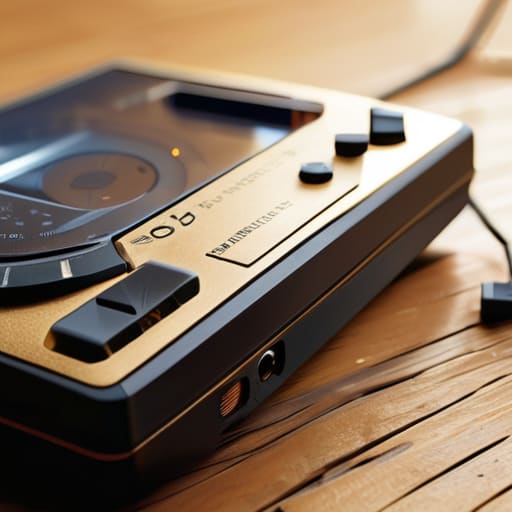
I was rummaging through my desk drawer yesterday—the one that serves as a graveyard for my beloved, obsolete tech—when I unearthed my old Sony Walkman. It’s a heavy, tactile little thing, and as I brushed off the dust, I couldn’t help but think about how our brains operate much like that device. Just as the Walkman uses mechanical gears to skip through tracks, our minds rely on psychological heuristics in judgment to breeze through life’s overwhelming data streams. These aren’t necessarily “broken” features, but they are shortcuts that can occasionally lead us into a loop of error.
When we look at the common types of cognitive distortions, we see these glitches in action. Take the “Confirmation Bias,” for instance—it’s like a filter on an old digital camera that only lets in the colors you already like, completely ignoring the rest of the spectrum. We seek out information that validates our existing views, effectively creating a digital echo chamber within our own consciousness. Whether we are navigating a complex social landscape or analyzing the impact of cognitive biases on business decisions, recognizing these patterns is the first step toward reclaiming our clarity.
The Hidden Wiring Psychological Heuristics in Judgment

If the cognitive distortions we discussed earlier are the glitches in our software, then psychological heuristics in judgment are more like the hardcoded, pre-installed operating systems of our brains. They are these lightning-fast mental shortcuts—essentially “quick-and-dirty” algorithms—that our minds use to navigate an overwhelming sea of information. Much like how my old Sony Walkman would skip if the player was bumped too hard, these shortcuts can sometimes cause our internal processing to jump tracks entirely, leading us to reach conclusions that feel intuitively right but are objectively skewed.
While these shortcuts are evolutionary marvels designed for efficiency, they often stumble when we face the nuanced complexities of the modern world. In the high-stakes arena of professional life, we see the significant impact of cognitive biases on business decisions, where a leader might favor a familiar strategy simply because it feels “safe,” rather than analyzing the data. We aren’t just making errors; we are navigating a world where our biological hardware is constantly trying to optimize for speed over accuracy. Learning to recognize these invisible patterns is the first step toward reclaiming our agency.
Debugging the Soul: 5 Ways to Recalibrate Your Internal Compass
- Embrace the “Slow Processing” Mode. Just like that clunky, beloved early-2000s MP3 player that took forever to load a single track, our best decisions often require a bit of buffer time. When you feel a sudden, sharp impulse to jump on a trend or make a snap judgment, hit the pause button. Give your brain the space to move from its lightning-fast, error-prone reactive state into a more thoughtful, deliberate rhythm.
- Run a “System Diagnostic” via Perspective Shifting. I often find myself looking at my collection of vintage pagers and wondering how different the world felt when communication was so singular and focused. Try to do the same with your thoughts. When you’re stuck in a bias loop, step outside your own skin. Ask yourself, “If I were looking at this situation through the lens of a stranger—or even a digital anthropologist—how would the data points change?”
- Audit Your Information Feed. We often fall into the trap of the “echo chamber,” much like a scratched CD that skips over everything except the one song we love. If your digital world feels too seamless, too agreeable, and too much like a mirror, you’re likely experiencing confirmation bias. Actively seek out the “glitches”—the dissenting opinions and the messy, unpolished perspectives—to ensure your mental map is actually accurate.
- Beware the “Sunk Cost” Software. It’s so easy to keep pouring energy into a failing project or a bad habit simply because we’ve already invested so much, much like trying to fix a broken GameBoy instead of embracing something new. Recognize when you are making decisions based on past expenditures rather than future potential. Don’t let your history dictate your trajectory.
- Practice Intellectual Humility (The “Beta Version” Mindset). In the tech world, nothing is ever truly “finished”; there is always a patch, an update, or a new iteration. Treat your own beliefs with that same sense of fluidity. Approach your decision-making process as a perpetual beta test. By accepting that your current understanding is subject to revision, you strip cognitive bias of its most powerful weapon: the illusion of certainty.
Navigating the Glitch

As we’ve unraveled, cognitive biases aren’t just abstract psychological concepts; they are the inherent glitches in our mental software, much like the charming but frustrating lag on an old Sony Walkman. From the way heuristics act as mental shortcuts to the specific distortions that warp our perception of reality, these patterns are deeply woven into our decision-making fabric. We’ve seen how these invisible currents can steer us off course, often without us even noticing the shift in direction. Recognizing these patterns—the “bugs” in our internal code—is the first step toward debugging our judgment and reclaiming a sense of clarity in an increasingly complex digital landscape.
Ultimately, embracing our biases isn’t about achieving some impossible state of perfect, robotic objectivity. Instead, it’s about cultivating a gentle, intentional awareness of the machinery at work within us. Just as I find beauty in the tactile click of a vintage pager, there is a profound, human beauty in the messy, imperfect way we process the world. By learning to pause and question our first impulses, we don’t just become better decision-makers; we become more thoughtful architects of our own lives. Let’s move forward not by trying to erase our humanity, but by learning to dance gracefully with the beautiful, complicated complexity of it all.