Did you know nearly 80% of consumers now like shopping both online and in-store? This big change shows how important it is for retail to innovate. As we move past the pandemic, retailers are quickly using technology to meet new customer needs and improve shopping experiences.
This digital change is making stores smarter with advanced analytics and better operations. It’s changing how we shop. By using these new tools, stores can offer more products and services. This makes shopping easier and more enjoyable for today’s smart shoppers.

But, using technology in stores isn’t easy. Old systems and a fear of change can slow things down. In this article, I’ll look at how stores are beating these challenges. They’re using data to stay ahead in the fast-changing world of online shopping.
Key Takeaways
- The majority of consumers now prefer a hybrid shopping experience.
- Retailers are leveraging technology to enhance customer experiences.
- Data analytics plays a critical role in modern retail strategies.
- Smart stores are transforming traditional retail operations.
- Overcoming legacy systems is vital for effective digital transformation.
- Cultural resistance can be a significant barrier to adopting new technologies.
The Shift Towards Digital Transformation in Retail
The retail world has changed a lot in recent years. This change is mainly because of how people shop now. The pandemic made people want to shop online and in stores easily. Now, it’s important for stores to offer a good experience both online and in person.
Consumer Behavior Changes Post-Pandemic
Customer expectations have changed a lot. People want to shop in many ways, like online and in stores. Brands that meet these new needs often improve how they treat customers.
Personalizing what they offer is key. Stores need to adjust to what each customer likes and needs.
The Role of Data and Analytics
Data and analytics are very important in this change. Stores use big data to learn about what customers like and buy. This helps them make their products better, manage their supply chains, and improve shopping experiences.
Being able to use data well helps stores keep customers happy and make more money. In today’s competitive market, this is very important.
Innovation in Retail: Integrating Technology for Enhanced Experiences
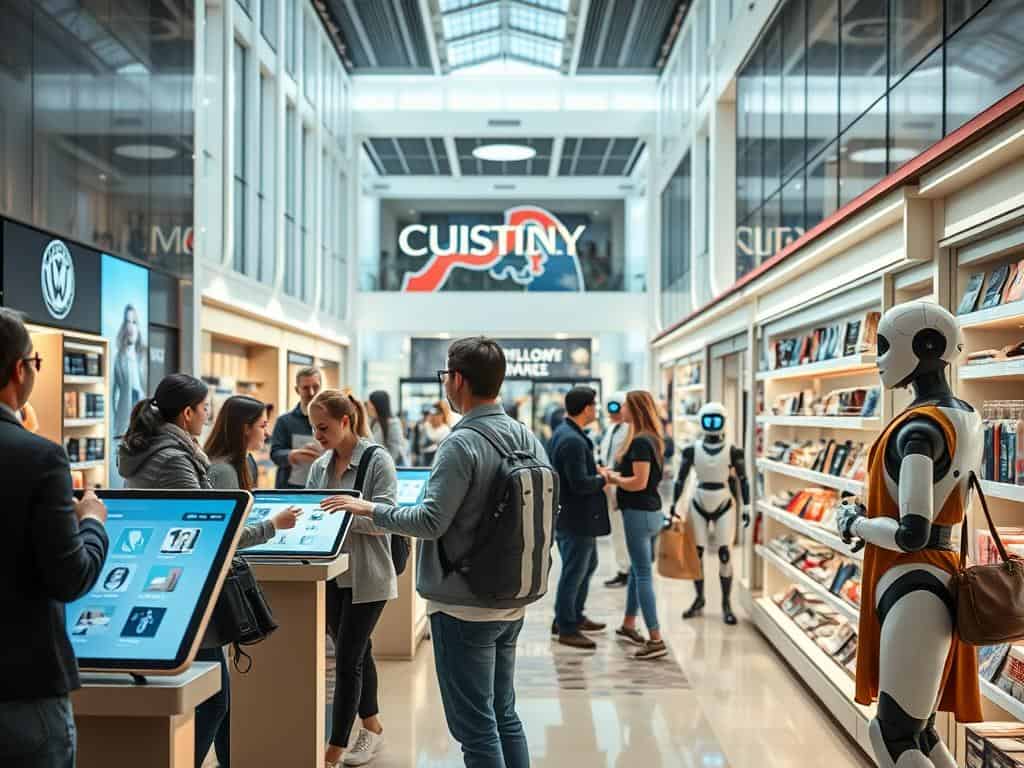
As I look into retail innovation, I see how new tech is changing things. Companies are using AI, augmented reality, and automation to improve shopping and store operations. These tools help retailers understand what customers want and improve what they offer.
Emerging Tech and Their Impact
Retailers are using new tech to make shopping smoother. For example, AI helps with customer service and knowledge management. This makes businesses offer more personalized services, building a stronger bond with shoppers.
Augmented reality also makes shopping better. It lets customers see products in their own homes before buying. This makes the shopping experience more engaging and personal.
Hybrid Retail Models
Hybrid retail models are also becoming popular. They mix online and offline shopping, meeting today’s shopper needs. For example, Amazon’s stores have no cashiers, making checkout easy.
Walmart uses big data to manage its stock better. This ensures customers find what they need when they visit. By using these hybrid models, retailers can make shopping better, more convenient, and stay competitive.
Challenges Retailers Face in Adopting New Technology
Bringing new tech into retail is both exciting and tough. Many stores struggle with old systems that make it hard to use new tools. These outdated setups often cause problems when trying to work smoothly with new tech.
Legacy Systems and Integration Issues
Old systems can block the way for new tech. They don’t work well with the latest tools. This leads to problems with data and makes things less efficient. Stores need to fix these issues to work better.
Cultural Resistance and Skills Gaps
Change can be hard for some employees. They might worry that new tech will mess up their work. There’s also a lack of skills in some teams, which limits what new tech can do. Training is key to getting everyone up to speed.
Conclusion
The future of retail is bright, thanks to innovation and digital changes. Consumer wants change fast, and stores must keep up. Those using new tech, like online shopping and smart stores, will do well.
Stores face big challenges, like old systems and resistance to change. But, by focusing on tech and customers, they can grow. Using data and listening to customers can turn problems into chances to improve.
In short, the retail future depends on brands using new ideas and digital changes. This path is tough, but it leads to better customer experiences and lasting success.