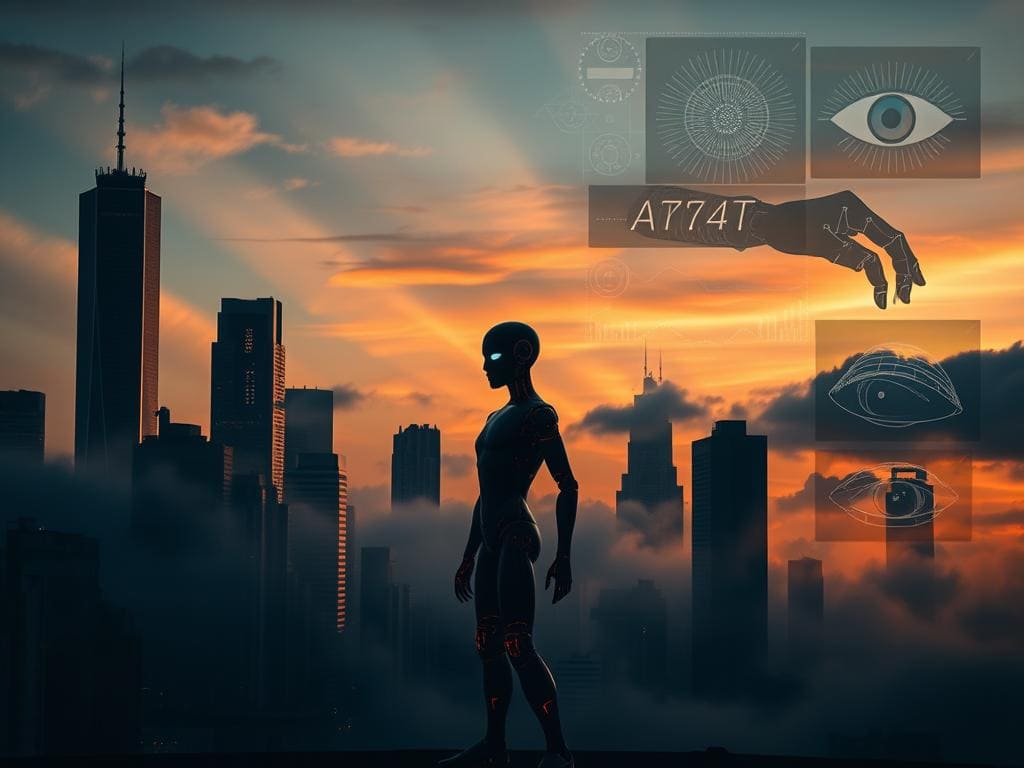
Looking back, I’m amazed at how far technology has come. From old punch cards to AI tools like ChatGPT, it’s incredible. But, I worry about the risks ahead. AI brings us convenience and efficiency, yet it also raises big ethical questions.
Automation is changing jobs and our lives in big ways. It’s exciting, but we must look at AI’s darker side. This side challenges our values and morals. As we move forward, we must be careful to balance progress with responsibility.
Key Takeaways
- AI technology offers both benefits and risks.
- Understanding AI ethics is vital for responsible use.
- Automation is reshaping the job market significantly.
- Ethical dilemmas arise from AI decision-making.
- Future risks associated with AI must be critically assessed.
The Friendly Facade of AI
I find the paradox of AI technology fascinating. It has made our daily tasks more efficient. Personal assistants like Siri and Alexa learn our preferences and help us out. This makes our lives easier, but there’s more to it than meets the eye.
The Dual Nature of AI Technology
AI technology has a dual nature. It can make our lives better and introduce challenges. The benefits are clear, but so are the risks. We must be aware of both sides as we use AI.
How AI Appears to Improve Our Lives
Many see AI as a positive force, making life more convenient. It streamlines services and personalizes our experiences. But, we must be careful not to rely too much on it.
The Hidden Risks of Data Collection
Data collection in AI is a hidden risk. Enjoying personalized experiences comes with privacy risks. Incidents like military personnel’s location being exposed through apps show the danger. We need clear rules and ethics in AI.
The Consequences of Automation on Employment
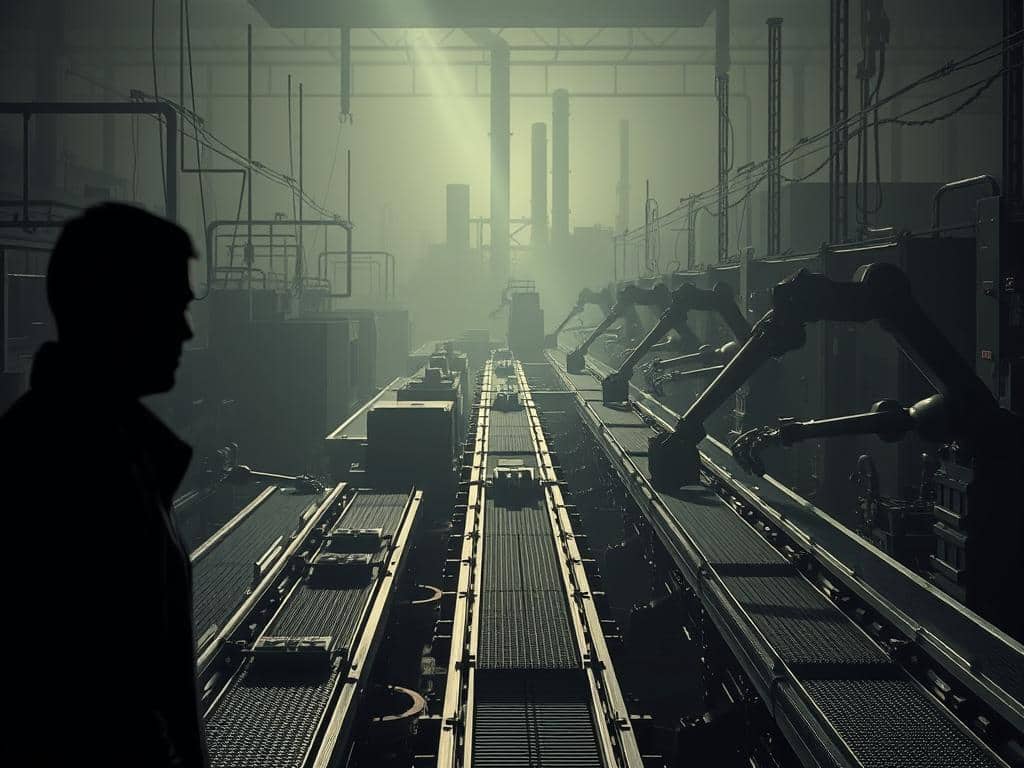
Automation and AI are changing the job market in many ways. This shift raises big questions about the future of work. It’s important to understand how AI is changing traditional jobs as we move forward.
The Impact of AI on Job Markets
AI has already changed how jobs work. Some jobs are disappearing, while new ones are being created. This is a common pattern with new technology.
It’s key to keep up with these changes. We need to know which jobs are most affected by automation.
Traditional Roles vs. AI Integration
AI is challenging traditional jobs in many fields. Industries that used to rely on people are now using machines. This means workers need to learn new skills.
Being able to adapt is more important than ever. It helps people stay relevant in the job market.
Potential Future Scenarios for Employment
Looking ahead, there could be different scenarios for jobs because of AI. One possibility is a big talent gap where certain skills are very valuable. Another is a mix of humans and AI working together.
Planning for the future will be key. We need to prepare the next generation for the challenges and opportunities ahead.
AI Ethics: Navigating Moral Dilemmas
The rise of artificial intelligence has brought big ethical challenges. One major issue is algorithmic bias. The data used to train AI often shows society’s unfairness.
For example, predictive policing unfairly targets minority groups. This shows how AI can make things worse. We need to make AI fair and ethical from the start.
Inherent Biases in AI Algorithms
AI algorithms have biases because of the data they learn from. This data often includes old prejudices. It leads to unfair AI choices, making things worse for some groups.
It’s important to understand these biases to make AI fair. We need to fix these problems to ensure AI helps everyone equally.
Ethical Challenges in Autonomous Decision-Making
Autonomous systems raise big ethical questions. For instance, a self-driving car accident led to a tragic loss of life. It made us wonder who’s to blame.
We need clear rules to handle these situations. This way, we can keep human values in mind when AI makes decisions.
Addressing Accountability in AI Development
Unethical AI practices are a big concern. Past mistakes, like data misuse, show we need better rules. We need strong checks and clear guidelines for AI.
Working together, developers, ethicists, and regulators can make AI better. This way, we can trust AI and avoid its risks.
Conclusion
As I wrap up my look into AI’s complexities, I stress the need to explore this tech with both wonder and caution. The debate over AI’s good and bad sides makes us think deeply about how it fits into our lives. AI could make things easier and more convenient, but we must also think about its ethical side.
The risks AI poses remind us to be careful and informed about these technologies. We should push for AI to be open and developed ethically. This way, we can use AI in ways that respect human values and improve our lives.
I hope we all work together to make AI development align with our values. This means joining the conversation about AI and questioning any practices that might harm us. By doing this, AI can become a powerful force for good in our world.