Growing up, I often looked up at the stars, wondering what was out there. As a kid, I was amazed by the Apollo missions. I loved seeing pictures of astronauts on the moon.
Now, we’re in a new era of space exploration. Countries like China and the United States are racing to be the best. They’re aiming for Mars and private companies are joining the fun. This isn’t just about who wins. It could change the world and inspire new generations.
As I learn more about this, I feel the excitement growing. Who will be the first to reach the stars in this new race?
Key Takeaways
- Competition in space exploration is intensifying among nations and private enterprises.
- China and the United States are the key players in the next space race.
- Significant technological advancements are shaping the landscape of space missions.
- Private space companies are playing an increasingly important role in exploration efforts.
- The outcome of these Mars missions could impact global politics significantly.
The Rise of Space Exploration in the 21st Century
The 21st century has seen a big change in space exploration. Countries and private companies are working together to explore beyond Earth. This teamwork has brought new players into the space mission world.
Significant Players in the New Space Race
Today’s space race includes more than just the US and Russia. Countries like China and India are also making big strides. They are working on missions to the Moon and Mars, thanks to teamwork between governments and private companies.
The Role of Private Enterprises
Private companies like SpaceX and Blue Origin are changing space missions. They’ve made launching things into space cheaper and introduced new ideas. Their work brings competition and creativity to space exploration.
Technological Innovations Driving the Race
New technologies are key to exploring space deeper. Reusable rockets and better propulsion systems make big projects possible. These innovations are opening up new possibilities and bringing us closer to dreams that seemed impossible before.
China’s Ambitions for Mars Missions
China’s space journey is moving fast, with big plans for Mars. The Tianwen-3 mission is a key part of this. It’s set to launch in 2028 and will show China’s skills in exploring other planets.
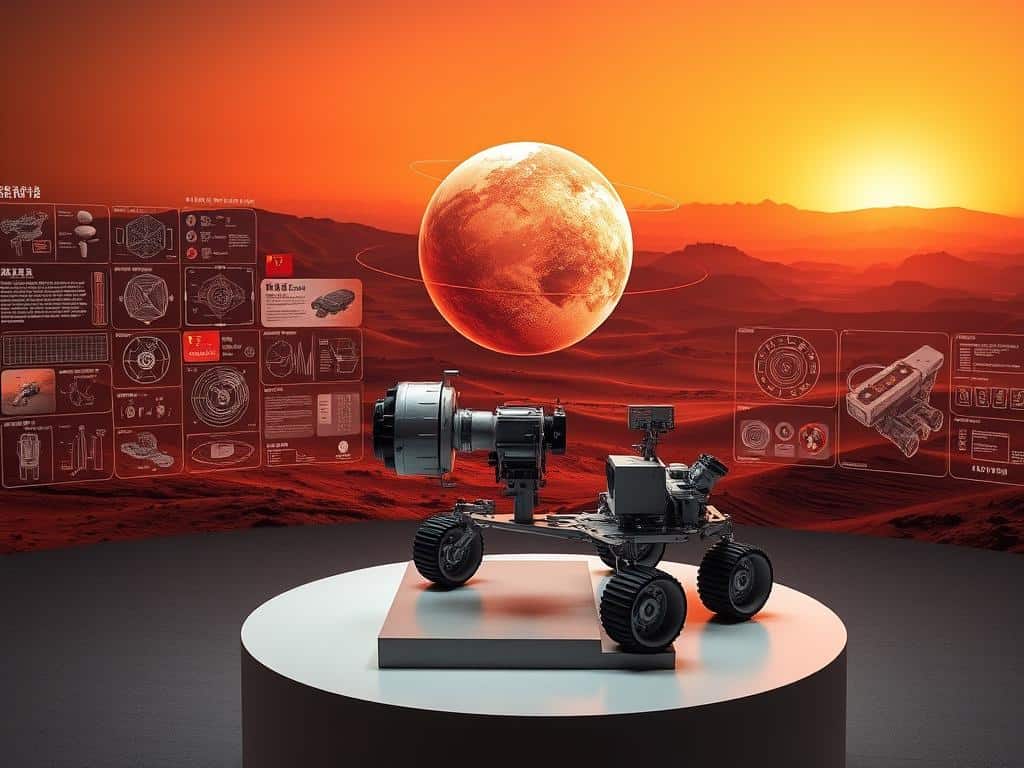
Tianwen-3: The Uncrewed Mars Sample Return Mission
The Tianwen-3 mission will send samples from Mars back to Earth by 2031. It will use powerful Long March 5 rockets. This mission shows China’s growing skill in space exploration.
It will use new tech from earlier missions. This will help China do complex space tasks.
China’s Successful Lunar Missions
China’s success in lunar missions helps its Mars plans. The Chang’e series is a big part of this. The Chang’e 6 mission brought back lunar samples.
This shows China can handle tough space tasks. By improving lunar mission skills, China is ready for Mars.
The Challenges Facing NASA and the United States
Space exploration is full of challenges, mainly for NASA and the United States. The Mars Sample Return Program and the Artemis Program are key examples. These programs aim high but face big obstacles that could affect their success.
NASA’s Mars Sample Return Program
The Mars Sample Return Program aims to bring back samples from Mars. This could reveal secrets about Mars’ past. But, it’s facing funding challenges and delays.
First, the cost was expected to be under $3 billion. Now, it’s estimated to be between $8 and $11 billion. The launch date has been pushed to 2033. NASA must overcome these financial and logistical hurdles.
The Artemis Program and Lunar Exploration
The Artemis Program wants to send humans back to the Moon and keep them there. It’s a big goal, but it’s facing technical issues. The Human Landing System problems have delayed the mission, possibly until 2028.
These delays highlight NASA’s struggle to manage complex missions. It shows the high stakes in space exploration.
Conclusion
We are on the edge of a new era in space exploration. The next space race is not just about winning. It’s also about global politics and economic plans.
The Moon and Mars could change how we see power. They could shift trade and international relations.
The United States needs to step up against China’s big plans. We must invest in space to stay ahead. This is not just for pride but for the future of space.
Working together might be the answer to our challenges. Turning competition into partnerships could boost our discoveries. This teamwork is key to a shared and prosperous space future.