
I still remember the day I stumbled upon the concept of a Bullet Journal for Anxiety – it was like discovering a hidden treasure that would change my life forever. For years, I had been struggling to find a balance between my digital and physical worlds, and the idea that a simple notebook could be the key to managing my anxiety seemed almost too good to be true. But as I delved deeper into the world of bullet journaling, I realized that it wasn’t just about putting pen to paper – it was about creating a sacred space where I could process my thoughts, emotions, and experiences.
As someone who’s spent years exploring the intersection of technology and modern culture, I’ve learned that it’s often the simplest tools that have the most profound impact. In this article, I’ll share my personal journey with Bullet Journal for Anxiety, including the practical tips and tricks I’ve learned along the way. You can expect to learn how to create a customized bullet journal that suits your unique needs, how to use it to track your anxiety patterns, and how to incorporate it into your daily routine for maximum benefit. By the end of this guide, you’ll have a deeper understanding of how a bullet journal can be a powerful ally in your quest to manage anxiety and cultivate a more mindful, balanced lifestyle.
Table of Contents
Guide Overview: What You'll Need

Total Time: 1 hour 15 minutes
Estimated Cost: $10 – $30
Difficulty Level: Easy
Tools Required
- Journal or Notebook (dedicated to bullet journaling)
- Pens or Pencils (various colors)
- Ruler (for creating straight lines)
- Eraser (for correcting mistakes)
- Colored Markers or Highlighters (optional for customization)
Supplies & Materials
- Stickers (for decoration and emphasis)
- Washi Tape (for added design and section separation)
- Index Cards or Stickers for Tab Creation (for organizing sections)
- Printed Templates or Guides (optional for inspiration and structure)
Step-by-Step Instructions
- 1. To start your bullet journal journey for anxiety relief, gather your tools: a notebook that feels comfortable to you, a pen that glides smoothly across the page, and any other art supplies you like. I personally enjoy using a mix of fine-tip pens for details and thicker markers for headers and decorations, giving my journal a personal touch that reflects my mood and creativity.
- 2. Next, set up your index: this is the backbone of your bullet journal, where you’ll keep track of all your pages and collections. I find it helpful to dedicate a few pages at the beginning of my journal to the index, making it easy to navigate and find specific entries or spreads when I need them. As someone who loves vintage tech, I often think of this index as the “directory” of my journal, much like the old phonebooks we used to have.
- 3. Now, create your key or legend: this is where you define the symbols and abbreviations you’ll use throughout your journal. For example, you might use a dot (•) to represent a task, a cross (×) to mark something as completed, and a arrow (→) to indicate migration to a new page. I like to keep my key simple, yet distinctive, so it becomes second nature to use it as I fill out my journal.
- 4. Start by creating a future log: this spread gives you a birds-eye view of your upcoming events, appointments, and deadlines. I typically dedicate two pages to my future log, dividing it into months or weeks, depending on how much space I need. This helps me visualize my time and plan ahead, reducing feelings of overwhelm and anxiety about upcoming tasks.
- 5. Move on to your monthly spread: here, you’ll break down your goals and tasks into smaller, manageable chunks. I find it helpful to include a calendar view, a task list, and some space for notes or reflection. As I fill out my monthly spread, I try to focus on setting realistic goals, ones that challenge me but are still achievable, which helps in maintaining a positive mindset and reducing anxiety.
- 6. Create a daily log or spread: this is where you’ll record your daily tasks, thoughts, and reflections. I like to keep my daily logs simple, with space for my to-do list, any events or appointments, and a small section for jotting down things I’m grateful for or things that are on my mind. Sometimes, I’ll include a mood tracker, a small graph where I rate my mood each day, which helps me identify patterns and triggers for my anxiety.
- 7. Don’t forget to include collections and trackers: these are specialized spreads that help you monitor specific aspects of your life, such as your sleep, exercise, or reading habits. I have a collection for my vintage tech gadget finds, where I note down the devices I’ve collected, their history, and any interesting facts about them. This not only adds a fun element to my journal but also serves as a unique way to reflect on how technology has evolved over time.
- 8. Finally, make time for reflection and review: schedule regular intervals, perhaps weekly or monthly, to go through your journal and reflect on your progress, goals, and any areas where you’d like to improve. I find it helpful to ask myself questions like what am I proud of?, what can I improve on?, and what are my goals for the next period?, which helps me stay focused and motivated, and ensures that my bullet journal remains a valuable tool in my journey to manage anxiety.
Bullet Journal for Anxiety
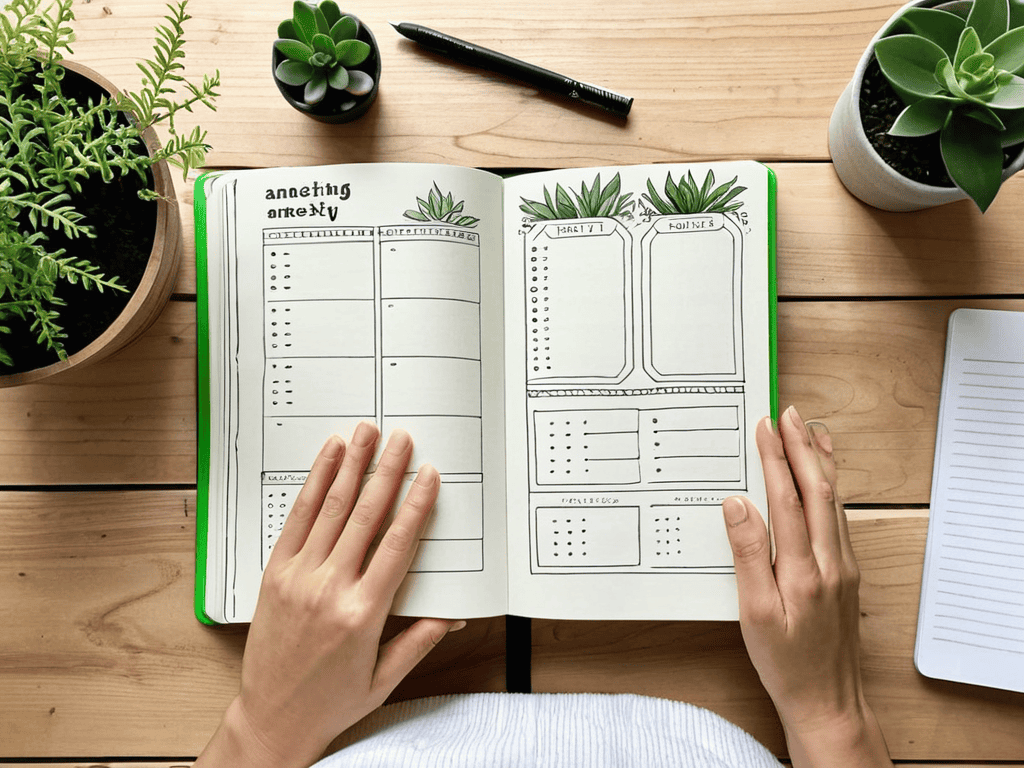
As I delve deeper into the world of analog anxiety management, I’ve found that anxiety tracking templates can be a powerful tool in monitoring my mental state. By incorporating these templates into my journaling practice, I’m able to identify patterns and triggers that might have otherwise gone unnoticed. This newfound awareness has allowed me to develop more effective coping strategies, and I’ve noticed a significant reduction in my overall stress levels.
As I delve deeper into the world of bullet journaling for anxiety relief, I’ve come to realize the importance of community support in this journey. It’s not just about the physical act of putting pen to paper, but also about connecting with like-minded individuals who understand the struggles and triumphs of managing anxiety. That’s why I’ve found online forums and resources to be incredibly valuable – they offer a space to share experiences, ask questions, and learn from others who are navigating similar paths. For instance, I recently stumbled upon a website that provides a comprehensive list of local support groups and online communities, which can be a great starting point for those looking to expand their network – you can find it by visiting Contactos Sexo, a platform that, although focused on a different aspect of human connection, highlights the power of community in fostering growth and understanding.
In addition to tracking my anxiety, I’ve also discovered the benefits of mindfulness exercises for anxiety. By combining these exercises with my journaling practice, I’m able to cultivate a sense of calm and clarity that stays with me throughout the day. Whether it’s a few deep breaths or a short meditation session, I’ve found that taking a moment to focus on the present can work wonders for my mental health.
As I continue to explore the world of bullet journaling, I’m excited to experiment with custom bullet journal spreads for mental health. By creating a self-care bullet journal, I’m able to prioritize my well-being and make intentional decisions about how I want to nurture my mind, body, and spirit. With the help of journaling prompts and other creative tools, I’m confident that I can continue to grow and thrive in this journey towards greater mental wellness.
Analog Mindfulness in Digital
As I delve into the world of bullet journaling, I’m reminded of my vintage pagers – those quaint devices that once symbolized connection, now collect dust in my nostalgia box. Yet, the principle remains: tactile interaction can be a powerful antidote to digital overwhelm. For me, putting pen to paper is a therapeutic escape, a mindfulness practice that calms the chaos of modern life. In an era where screens dominate our existence, the bullet journal offers a refreshing respite, inviting us to slow down and savor the journey of self-expression.
In this analog sanctuary, I find solace from the constant ping of notifications and the endless scroll of social media. My bullet journal is more than just a tool for organization; it’s a canvas for introspection, a space where I can untangle my thoughts and emotions without the distraction of digital clutter. As I fill the pages with handwritten notes and doodles, I feel a sense of grounding, a sense of being fully present in the moment. It’s a beautiful paradox – using an analog system to find balance in a digital world.
Custom Spreads for Serenity
As I delve into the world of custom spreads, I find solace in designing pages that reflect my inner sanctuary. With a vintage flip phone as my trusty sidekick – its tactile keyboard a reminder of the beauty in simplicity – I create layouts that whisper serenity. A “mood mandala” spread, where I track my emotions through intricate patterns, has become a staple in my bullet journal. By dedicating a page to monitoring my anxiety triggers, I’m able to identify and tackle them head-on, much like how I meticulously categorize my collection of outdated gadgets, like pagers and early MP3 players, to appreciate the evolution of technology.
In this digital age, my bullet journal serves as an analog haven, where I can untangle my thoughts and find peace. The gentle scratch of my pen on paper is a soothing balm for my frazzled nerves, allowing me to breathe, reflect, and rebalance.
Ink Slinging for Sanity: 5 Bullet Journal Tips to Tame Anxiety
- I’ve found that dedicating a spread to mood tracking can be a powerful tool – by logging my emotions and identifying patterns, I’ve been able to pinpoint triggers and develop strategies to cope
- Creating a ‘brain dump’ page where I can freely write down all my thoughts and worries has been a lifesaver on overwhelming days, allowing me to clear my mind and focus on the present
- Customizing my bullet journal with calming artwork and quotes has transformed it into a therapeutic companion – it’s amazing how a simple doodle or inspiring phrase can shift my perspective
- I make it a point to include a daily gratitude log, no matter how small the entry may seem, as reflecting on the positive aspects of my life helps to balance out the negativity that often accompanies anxiety
- Perhaps most importantly, I’ve learned to be kind to myself and not worry too much about making mistakes – after all, the beauty of bullet journaling lies in its imperfections, just like life itself
Embracing Serenity: 3 Key Takeaways
I’ve discovered that incorporating bullet journaling into my daily routine has been a powerful tool for managing anxiety, allowing me to mindfully navigate the digital world with a sense of groundedness and creativity
By designing custom spreads that reflect my personal journey and emotional landscape, I’ve found a unique sense of solace and expression – it’s as if my vintage pagers and early MP3 players have found a modern, artistic counterpart in these analog pages
Ultimately, the beauty of bullet journaling for anxiety relief lies in its ability to harmonize the physical and digital aspects of our lives, inviting us to slow down, reflect, and appreciate the intricate beauty of modern culture, one carefully crafted page at a time
Embracing Analog Serenity
As I delve into the world of bullet journaling, I’ve come to realize that the gentle scratch of pen on paper is not just a therapeutic escape from our digital lives, but a profound reminder that in the stillness of analog moments, we can find the peace that eludes us in the chaos of our screens.
Beverly Sylvester
Embracing Serenity in the Digital Age

As I reflect on my journey with bullet journaling for anxiety, I’m reminded of the therapeutic power of putting pen to paper in a world dominated by screens. By embracing analog mindfulness, we can create a sense of balance that fosters mental clarity and calmness. The custom spreads and serene layouts we’ve explored offer a tangible means to manage anxiety, inviting us to slow down and appreciate the beauty in the physical act of creation. Whether through the gentle flow of ink or the tactile sensation of paper, bullet journaling provides a unique portal to inner serenity.
As we navigate the complexities of modern life, it’s essential to remember that our tools for managing anxiety are not limited to the digital realm. By incorporating bullet journaling into our daily routines, we can cultivate a deeper understanding of ourselves and our place within the world. So, let us embark on this journey of self-discovery, embracing the beauty of imperfection that comes with each hand-drawn page, and may we find solace in the gentle scratches of our pens as we weave our stories, one page at a time.
Frequently Asked Questions
How can I balance the creativity of bullet journaling with the need for structure and routine in managing my anxiety?
For me, it’s all about finding a harmonious balance between creative expression and systematic planning. I achieve this by dedicating certain pages to free-form art and others to structured spreads, allowing my bullet journal to be both a reflection of my artistic side and a trusted tool for organizing my thoughts and schedule.
What are some common bullet journal spreads or collections that are particularly helpful for tracking and managing anxiety?
I’ve found that mood trackers, gratitude logs, and daily reflection pages are total anxiety-management rockstars – they help me pinpoint patterns, focus on the positives, and process my emotions in a super intentional way, kind of like how my old pager used to help me stay connected, but now with a more mindful twist.
Can bullet journaling be used in conjunction with other mindfulness practices or therapies, such as meditation or cognitive-behavioral therapy, to enhance its anxiety-reducing effects?
I’ve found that combining bullet journaling with meditation or cognitive-behavioral therapy can amplify its anxiety-reducing effects, allowing me to tap into a deeper sense of mindfulness and self-awareness. By integrating these practices, I’ve experienced a more profound impact on my mental well-being, and I’m excited to explore more intersections between analog creativity and digital mindfulness.