
I was rummaging through a box of my old electronics last weekend—specifically, a dusty, translucent blue MP3 player from 2002—when it hit me how much we overcomplicate the concept of connection. Economists love to drown us in sterile graphs and complex jargon when they try to explain how international trade affects local economies, treating it like some impenetrable, high-level math equation. But honestly? It’s not some abstract force moving through a vacuum; it’s much more visceral than that. It’s the reason the coffee in your mug traveled across an ocean, and why the small hardware store on your corner is suddenly competing with a digital ghost from halfway around the world.
I’m not here to give you a lecture filled with dry statistics or the usual corporate fluff. Instead, I want to peel back the digital curtain and look at the human heartbeat behind the supply chains. I promise to walk you through this landscape with a bit of grounded, real-world perspective, exploring how these global currents actually reshape our neighborhood streets and personal pockets. We’re going to look past the hype to see the true, messy beauty of how our local lives are being stitched into a much larger, global tapestry.
Globalization and Local Job Markets a Shifting Tapestry

I was rummaging through my collection of old Sony Walkmans last weekend, marveling at how much physical space a single device used to occupy, when it hit me: our local labor markets have undergone a similar, invisible compression. Just as those tiny chips shrunk the hardware, the forces of globalization and local job markets have fundamentally reconfigured the professional landscape of our neighborhoods. We aren’t just competing with the shop down the street anymore; we are part of a vast, interconnected dance where a shift in a manufacturing hub halfway across the globe can ripple through our local town square like a pebble tossed into a still pond.
It’s a delicate, often dizzying, transition. We see these economic shifts from foreign competition manifesting in real-time, as traditional roles evolve or vanish, making way for new, tech-driven niches. It isn’t merely about the loss of old industries, but rather the way the supply chain effects on local businesses create a new kind of dependency. We are becoming more specialized, leaning into our unique strengths, yet we find ourselves more tethered to the ebbs and flows of a global tide than ever before.
The Import and Export Economic Impact on Our Shores
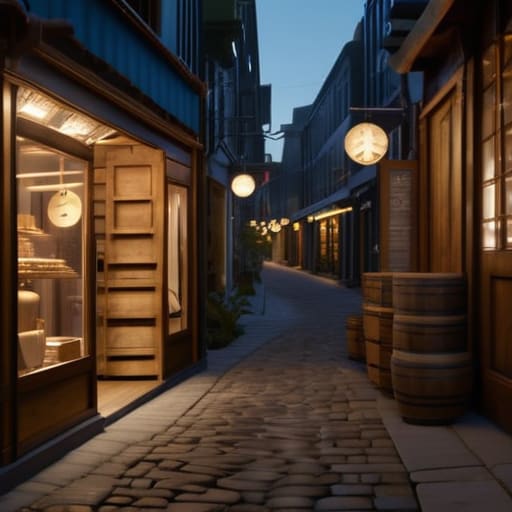
I was rummaging through my desk drawer yesterday—the one that serves as a graveyard for my beloved, clunky early 2000s MP3 players—when I found an old shipping manifest from a defunct local boutique. It felt like a tiny, paper relic of a different era, yet it perfectly illustrated the import and export economic impact we feel so acutely today. When we look at our own streets, the influx of foreign goods isn’t just about convenience; it’s a rhythmic tide that dictates which local storefronts thrive and which ones struggle to keep their lights on.
This ebb and flow creates a complex tension between accessibility and preservation. We see the benefits of diverse goods arriving at our doorsteps, but we also witness the supply chain effects on local businesses as they navigate a world where a hiccup in a distant port can suddenly empty a neighbor’s shelf. It’s a delicate dance of connectivity, where every imported gadget or exported craft serves as a pulse point, signaling how deeply our local rhythms are synchronized with the global heartbeat.
Navigating the Currents: 5 Ways to Read the Global-Local Pulse
- Keep a watchful eye on the “micro-shifts” in your neighborhood storefronts; when a local boutique starts stocking artisanal goods from halfway across the globe, it’s a living signal of how international supply chains are rewiring our local tastes and spending habits.
- Look beyond the obvious factory closures and seek out the “hybrid roles”—the new jobs that emerge when local businesses pivot to become specialized hubs for international logistics or digital export services.
- Treat your local farmers’ market like a vintage tech fair; observe how global commodity prices act like a hidden operating system, dictating whether a local grower can afford to stay rooted or if they must adapt to international market rhythms to survive.
- Map the “invisible imports” in your daily routine, recognizing that the sudden availability of niche, affordable goods isn’t just convenience—it’s a symptom of how global trade efficiency can either democratize luxury or inadvertently squeeze out the local craftsman.
- Foster “community resilience buffers” by supporting businesses that blend global connectivity with local soul, ensuring that as we plug into the worldwide network, we don’t lose the unique, analog texture that makes our own town square feel like home.
The Human Pulse in a Globalized Network

As we’ve unspooled the threads of this complex tapestry, it becomes clear that international trade is far more than just a series of logistical data points or fluctuating exchange rates. It is a living, breathing force that reshapes our job markets, alters the very rhythm of our local commerce, and dictates the availability of the goods we hold in our hands every day. From the way a shift in overseas manufacturing can ripple through a small town’s main street, to the way our local artisans find new life in a global marketplace, we are witnessing a constant state of flux. Much like my old collection of early 2000s MP3 players—which once felt like the cutting edge of personal connection but now serve as quiet relics of a specific era—our current economic structures are evolving in real-time, constantly recalibrating to meet the demands of a shrinking world.
Ultimately, navigating the currents of global trade requires us to look beyond the spreadsheets and see the people caught in the swell. We must strive to build local resilience that doesn’t fear the world, but rather learns to dance with its complexities. As we move forward into an even more interconnected digital and physical future, let us aim to foster an economy that celebrates local ingenuity while embracing the vast possibilities of the horizon. By understanding these invisible connections, we can ensure that as our world grows smaller, our community roots grow deeper.
As we navigate these complex shifts in how goods and services move across our borders, it’s easy to feel a bit untethered, as if we’re trying to tune an old transistor radio to a frequency that’s constantly drifting. To keep your own sense of connection grounded amidst such rapid global flux, I often find it helpful to lean into tools that prioritize personal agency and privacy. For those looking to explore more intimate, digital-first ways of communicating without leaving a permanent footprint on the vast, public-facing web, exploring anonymous sexting can be a fascinating way to reclaim a sense of private autonomy in an era where every digital interaction feels increasingly scrutinized by the global market.