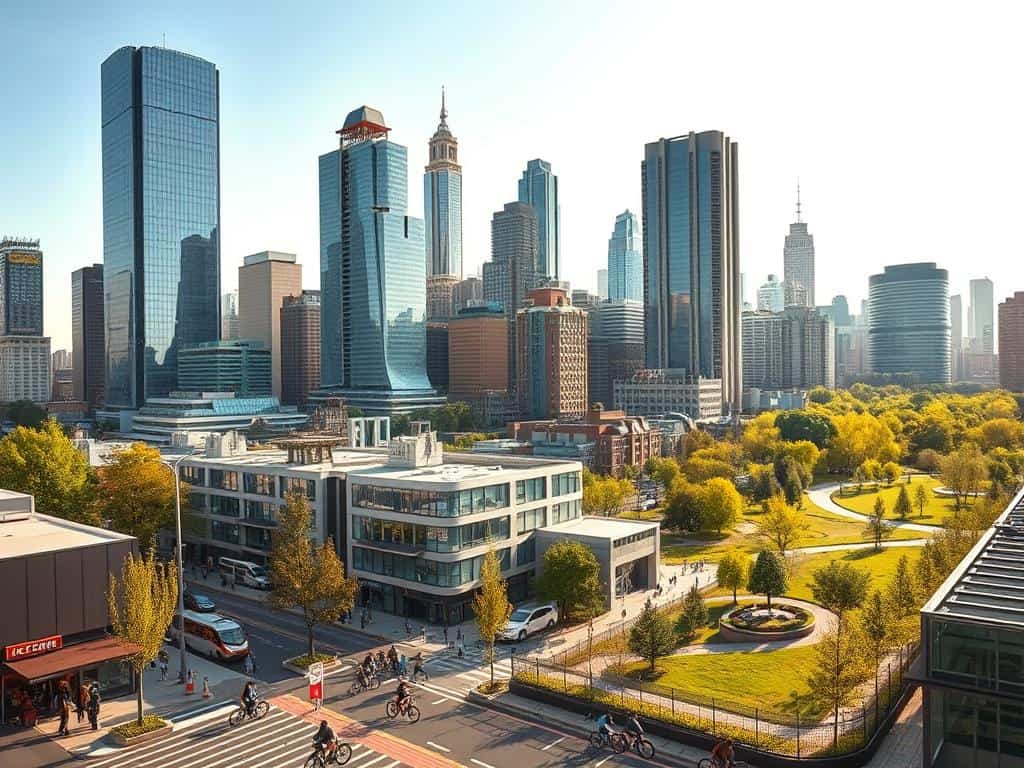
As I walked through my neighborhood, I saw big changes. Streets that were once busy now have pop-up parks. Food trucks serve meals among fresh greenery, showing how cities are changing.
The pandemic made us think differently about our surroundings and each other. It started a big talk about the future of cities. Now, cities are not just for work and travel. They’re becoming places that are strong, fair, and green.
Creating cities that are better for living is key. They should use new technology and involve the community. I think we’re on the edge of a new era for city living.
Key Takeaways
- The pandemic has reshaped how urban spaces are utilized and perceived.
- Successful urban transformation focuses on resilience, equity, and sustainability.
- Post-pandemic economic recovery relies on innovative urban development strategies.
- Engaging local communities is essential for effective city planning.
- Cities must adapt to technological advances to thrive in the new normal.
Shifts in Urban Development and Economic Recovery
The pandemic has made us rethink how we build cities. Cities are now focusing on economic recovery. They aim to create spaces that meet the needs of everyone.
Understanding Post-Pandemic Economic Trends
Urban economies have changed a lot. Cities are moving away from old economic models. With more people working from home, office spaces are empty.
This change is making cities rethink their plans. Diversifying their economies can help cities grow stronger. This way, they can handle future economic challenges better.
The Role of Diverse Economies
Diverse economies are key for cities. They help cities stay strong by having different industries. This attracts more people and encourages new businesses.
When cities work together, they can lead in innovation. This makes urban areas better for everyone.
Creating Smart Cities for Improved Urban Living
Our cities are changing, and smart cities are key to better living. They use new tech to make cities better, more efficient, and responsive. This can turn cities into places where people really flourish.
Adapting to Technological Advances
Modern tech is essential for smart cities. I’ve seen how cities use data, sensors, and IoT to improve. These tools help cities make quick, smart choices, leading to better services and management.
The Integration of Sustainable Solutions
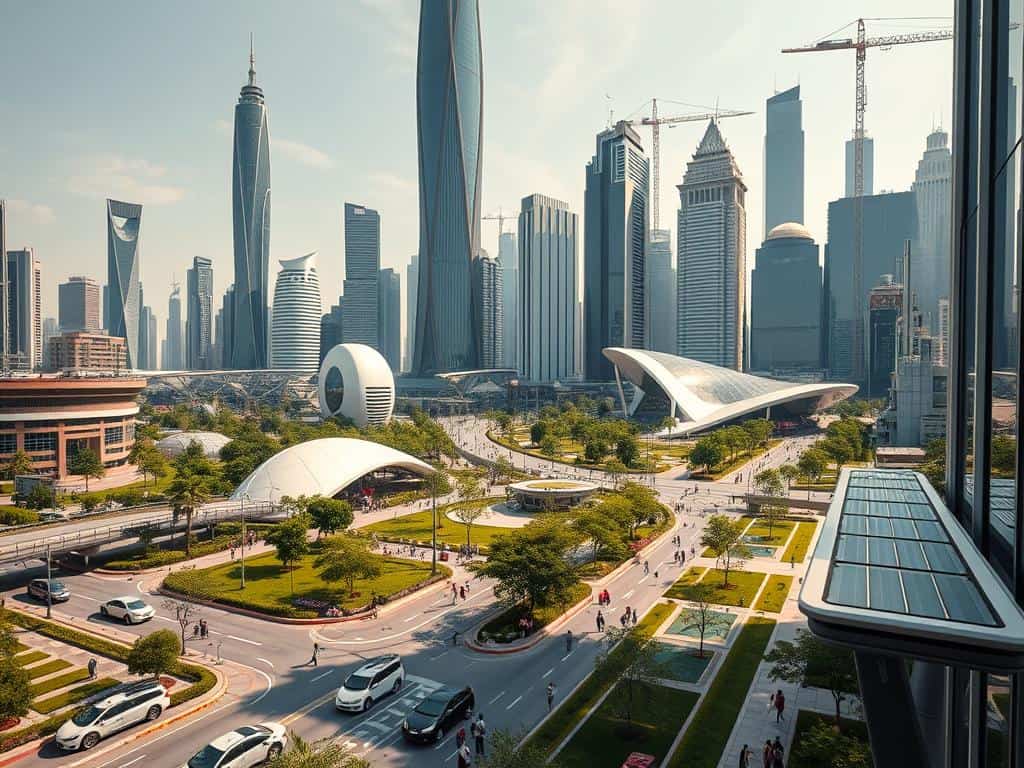
Sustainable design is a big part of smart cities. Cities are focusing on green solutions for waste, energy, and transport. This makes cities better for living and helps fight climate change. Combining green with tech makes cities strong and sustainable for the future.
Rethinking Public Spaces and Community Engagement
Changing urban areas needs careful thought about public spaces and community involvement. The pandemic showed us how hard it is for cities to keep people connected and healthy. Now, we have a chance to make our cities better by getting more people involved.
Participatory Budgeting for Better Urban Environments
Participatory budgeting is key to letting people shape their cities. It lets folks decide how money is spent, making sure public areas meet community needs. This way, people feel more connected to their surroundings, making public spaces more lively.
Putting participatory budgeting first helps build inclusive public areas that work together. It lets different voices be heard, making decisions better and building stronger community ties. This approach not only makes public spaces better but also brings people closer together.
Conclusion
Looking at our cities, it’s clear we’re not just going back to how things were before. This time is a chance to make our cities better, more resilient, and dynamic. By focusing on economic diversity, we can build strong local economies that can handle surprises.
Adding smart technologies to our cities is key for better living. With data analytics, AI, and green practices, we can make cities work better and be more welcoming. I believe using these tools will help us build a stronger, greener community.
At the core of this change is community involvement. When people help shape their cities, the results better meet their needs. By letting everyone have a say, we create places that truly reflect our community’s spirit.