
The world is witnessing an unprecedented pace of technological advancements, transforming both our professional and personal lives. According to Gartner’s research on strategic technology trends, the most influential innovations are expected to disrupt industries and accelerate business success in the coming years.
As technology continues to evolve, it’s not just new trends that are reshaping the future, but the roles of IT professionals themselves. Staying ahead of emerging trends has become crucial for future-proofing careers in today’s rapidly changing landscape.
Key Takeaways
- The pace of tech innovations is transforming industries and business operations.
- Staying ahead of emerging trends is crucial for future-proofing careers.
- New technology trends are reshaping the future and creating new opportunities.
- Professionals need to develop new skills to remain relevant.
- The future of technology holds significant promise for businesses and individuals alike.
The Current State of Tech Innovations in 2024
As we step into 2024, the landscape of tech innovations is more dynamic than ever. Despite a decline in technology equity investments by 30 to 40 percent to approximately $570 billion in 2023 due to rising financing costs and a cautious near-term growth outlook, the pace of innovation has not slowed. Investors are now favoring technologies with strong revenue and margin potential.
How Technology Is Transforming Work and Life
Technology is revolutionizing the way we work and live. The exponential growth in computing power is enabling more sophisticated applications, while the democratization of technology through cloud services and open-source tools is allowing organizations to access cutting-edge capabilities without massive upfront investments. As artificial intelligence and machine learning advancements continue to serve as catalysts for innovation, industries are being transformed.
Key Drivers Behind Today’s Tech Revolution
Several key drivers are behind today’s tech revolution. The increasing availability of data and sophisticated analytics systems is providing the foundation for more intelligent technological solutions. Changing consumer and business expectations are creating market demand for personalized, efficient, and sustainable technology solutions. Furthermore, competitive pressures and the need for business growth are driving companies to embrace technological innovation as a strategic imperative.
According to industry experts, “The future of technology is not just about innovation; it’s about
transforming businesses and lives through sustainable and efficient solutions
.” This sentiment is echoed across the tech landscape, where companies are leveraging technology to drivegrowth and market expansion.
Understanding the Impact of Tech Innovations Across Industries
The influence of technological advancements on industries is multifaceted, affecting everything from customer relationships to operational efficiency. As businesses continue to adopt new technologies, the landscape of various sectors is undergoing significant transformations.
Improving Customer Relationships and Experiences
Technology is being leveraged to enhance customer interactions and experiences. By utilizing data analysis tools and implementing new systems, businesses can gain a deeper understanding of their customers’ needs and preferences. This enables them to tailor their services and products accordingly, thereby improving customer satisfaction and loyalty.
The use of technology also facilitates more efficient communication with customers. For instance, companies can employ cloud-based collaboration tools to respond promptly to customer inquiries and provide timely support.
Optimizing Business Processes and Productivity
The application of technological innovations in internal processes allows companies to increase efficiency and optimize decision-making. This can involve process automation, the adoption of new management systems, or the use of data analytics to inform business strategies.
By streamlining workflows and eliminating repetitive tasks, businesses can achieve significant productivity gains. For example, automation technologies can be used to simplify financial transactions and human resource management, freeing up resources for more strategic activities. Additionally, the integration of IoT sensors and real-time analytics can transform operations in manufacturing, logistics, and supply chain management, providing unprecedented visibility and control.
Overall, the effective use of technology can lead to increased value for businesses, enabling them to stay competitive in a rapidly evolving market.
Generative AI: Leading the Tech Innovation Wave
Generative AI is revolutionizing industries by transforming how businesses operate and innovate. This technology is not only enhancing productivity but also revolutionizing how businesses approach problem-solving, customer engagement, and creative processes.
Revolutionizing Content Creation
Generative AI is making significant strides in content creation, enabling businesses to produce high-quality, personalized content at scale. By leveraging artificial intelligence models, companies can automate the generation of various content types, from blog posts to social media updates.
The use of generative AI in content creation is streamlining marketing efforts and allowing for more targeted and effective campaigns. With the ability to analyze data and understand audience preferences, businesses can create content that resonates with their target audience.
Real-World Business Applications
Generative AI has numerous real-world applications across various industries, including customer service, marketing, and product development. Businesses are implementing generative AI systems to enhance customer service through sophisticated chatbots and virtual assistants.
In marketing, generative AI is being used to create customized content, such as personalized email campaigns and targeted advertisements. Additionally, product development teams are leveraging generative AI for ideation, prototyping, and design iteration, significantly accelerating the innovation process and driving business growth.
Quantum Computing: Computing’s Next Frontier

Quantum computing represents a significant leap forward in computational power, promising to solve complex problems that have long been intractable for traditional computers. The technology is still nascent but poised to revolutionize industries by solving complex problems.
Understanding Quantum Computing Fundamentals
At its core, quantum computing leverages the principles of quantum mechanics to perform calculations exponentially faster than classical computers in certain domains. This is achieved through the use of quantum bits or qubits, which can exist in multiple states simultaneously, allowing for the exploration of vast solution spaces in parallel. Understanding these fundamentals is crucial for appreciating the potential of quantum computing to transform various sectors.
Industries Being Transformed by Quantum Technologies
Several industries are on the cusp of being transformed by quantum technologies. For instance:
- Pharmaceutical and biotechnology industries are leveraging quantum computing for molecular modeling and drug discovery, potentially reducing development timelines from years to months.
- Financial services companies are exploring quantum algorithms for portfolio optimization, risk analysis, and fraud detection that could provide significant competitive advantages.
- Quantum computing is poised to transform cryptography and cybersecurity, both by breaking current encryption methods and by enabling new, quantum-resistant security protocols.
- Materials science research is being accelerated by quantum simulations that can model atomic interactions with unprecedented accuracy, leading to discoveries of new materials with novel properties.
- Logistics and supply chain optimization problems that are computationally intensive for classical computers may become tractable with quantum approaches.
These examples illustrate the vast potential of quantum computing to drive innovation and efficiency across diverse industries, leveraging advancements in technology and computing capabilities.
5G Expansion and Advanced Connectivity

With the rollout of 5G networks, we’re on the cusp of a new era in connectivity and data transfer. This technology is crucial for enabling real-time communications and processing large amounts of data with minimal delay, thereby supporting a new wave of technological innovation.
Enabling New Tech Possibilities
The technology offers speeds up to 10 times faster than 4G, with peak data rates reaching up to 20 gigabits per second. This enables new applications in areas like telemedicine, remote education, and distributed work that require reliable, high-quality connections. As a result, we’re seeing a convergence of multiple connectivity technologies creating more resilient and flexible networks.
Satellite-based internet systems like Starlink are complementing terrestrial networks to provide truly global connectivity, even in remote and underserved regions. This is expanding the range of devices that can be connected, enabling a wider array of information to be exchanged.
The Future of Connectivity and Data Transfer
As we look to the future, the development of 6G and other advanced wireless technology promises even greater speeds and capabilities. Advanced data transfer protocols and compression systems are evolving to maximize the efficiency of available bandwidth. This will enable new applications and services that rely on the rapid transfer of data.
The democratization of high-speed connectivity could reshape economic opportunities and social interactions on a global scale. As devices become increasingly interconnected, the potential for innovation and growth expands, driving us towards a more interconnected world.
Virtual and Augmented Reality Breakthroughs

The evolution of virtual and augmented reality is transforming how we interact with technology. These advancements are not only enhancing user experiences but also opening new avenues for businesses and educational institutions.
VR2.0: The Evolution of Immersive Experiences
The latest developments in VR, often referred to as VR2.0, are providing more sophisticated and immersive experiences. With improved devices and a wider range of applications, VR is becoming increasingly integral to various sectors.
I will examine how businesses are leveraging VR for training and simulation, enhancing their operational efficiency and reducing costs.
Augmented Reality: Practical Applications in Business and Education
Augmented reality is poised to be a major tech trend in 2025, further integrating into consumer and enterprise applications. With advancements in hardware, such as AR glasses and improvements in mobile devices, AR is set to transform industries like retail, real estate, and education.
I will analyze how retail companies are using AR for virtual try-ons and product visualization, reducing returns and enhancing customer confidence in online purchases. Additionally, I will explore how educational institutions are leveraging AR to create interactive learning experiences that make abstract concepts tangible and engaging for students, utilizing data and information effectively.
The development of AR and VR technologies is driving innovation across various sectors, enhancing how users interact with their environments and access information. As these technologies continue to evolve, we can expect to see significant advancements in their applications and development.
Internet of Things (IoT) and Smart Technologies

With the number of IoT devices projected to reach 30 billion by 2025, the impact of IoT on our lives is expected to be significant. This growth is driving innovation in various sectors, including smart homes, cities, and industries, by enabling the connection of a wide range of devices and systems.
IoT Applications in Smart Cities and Infrastructure
IoT technology is being applied in smart cities to improve infrastructure, public services, and the overall quality of life. This includes intelligent transportation systems, smart energy management, and public safety initiatives, all of which rely on the efficient exchange of data and information.
These applications are transforming urban living by making cities more livable, sustainable, and responsive to the needs of their citizens.
The Growing Ecosystem of Connected Devices
The IoT ecosystem is evolving rapidly, with an increasing variety of connected devices being designed for specific applications and environments. This includes consumer products like smart appliances and wearables, as well as industrial sensors and autonomous machines, all of which are enhancing connectivity.
The integration of edge computing capabilities into IoT devices is also reducing latency and bandwidth requirements, making the IoT ecosystem more efficient. Furthermore, the development of interoperability standards and protocols is enabling different systems to work together seamlessly, driving the growth of the IoT ecosystem.
The growth of IoT is creating new business models, such as device-as-a-service offerings and data monetization strategies that leverage the information generated by connected devices. As the IoT ecosystem continues to expand, we can expect to see even more innovative applications of technology across various industries.
Sustainable Tech Innovations for a Greener Future

Sustainable tech innovations are revolutionizing the way we interact with the environment. Thanks to current technological innovations, companies can now innovate in environmental sustainability by implementing technologies that reduce their impact on the environment, increase energy efficiency, optimize the use of raw materials, or minimize waste.
Renewable Energy and Electrification Technologies
The shift towards renewable energy sources is gaining momentum, driven by advancements in energy storage and grid management. I’ll examine how these technologies are transforming the way we generate and consume energy. Technologies such as solar and wind power are becoming increasingly efficient and cost-effective, making them more viable alternatives to fossil fuels.
How Tech Is Addressing Climate and Sustainability Challenges
Technology is playing a vital role in addressing climate change and sustainability challenges. I’ll analyze how data analytics and AI are being applied to environmental monitoring and modeling, providing unprecedented insights into climate patterns and the impacts of human activities. Additionally, I’ll explore how data is being used to optimize systems for better efficiency and reduced waste.
Some of the key areas where tech is making a difference include:
– AI and data analytics for environmental monitoring and modeling
– Blockchain and IoT for transparent and efficient supply chains
– Precision agriculture for optimized water and fertilizer use
– Circular economy technologies for product design and waste reduction
– Carbon capture, utilization, and storage technologies for emissions reduction
– Technology companies reducing their environmental footprints through sustainable practices
These innovation projects are crucial in driving us towards a more sustainable future. By leveraging technology, we can create a better tomorrow for generations to come.
Biotechnology and Healthcare Tech Innovations

The convergence of biotechnology and healthcare technology is driving unprecedented innovation. This synergy is transforming the way we approach healthcare, making it more personalized, accessible, and effective.
Personalized Medicine and Genomics Breakthroughs
Advances in genomics and biotechnology are enabling personalized medicine, tailoring treatments to individual genetic profiles. This approach improves treatment efficacy and reduces adverse reactions. By analyzing genomic data, healthcare providers can identify genetic predispositions and develop targeted interventions.
The integration of genomics into healthcare is expanding the range of diagnostic tools and therapeutic options. This is a significant step forward in making healthcare more precise and effective.
Wearable Health Monitoring and Telemedicine
The rise of wearable health monitoring devices and telemedicine is revolutionizing patient care. Advanced devices now continuously monitor various health metrics, providing real-time insights into patients’ conditions. These devices connect to smartphones, using AI to analyze data and offer early warnings about potential health issues.
Telemedicine platforms integrate with wearable systems, enabling more informed remote consultations and ongoing care management. This shift towards preventive healthcare and personalized health insights is improving outcomes for patients with chronic conditions, reducing healthcare costs, and increasing accessibility to information.
Robotics and Automation Revolution
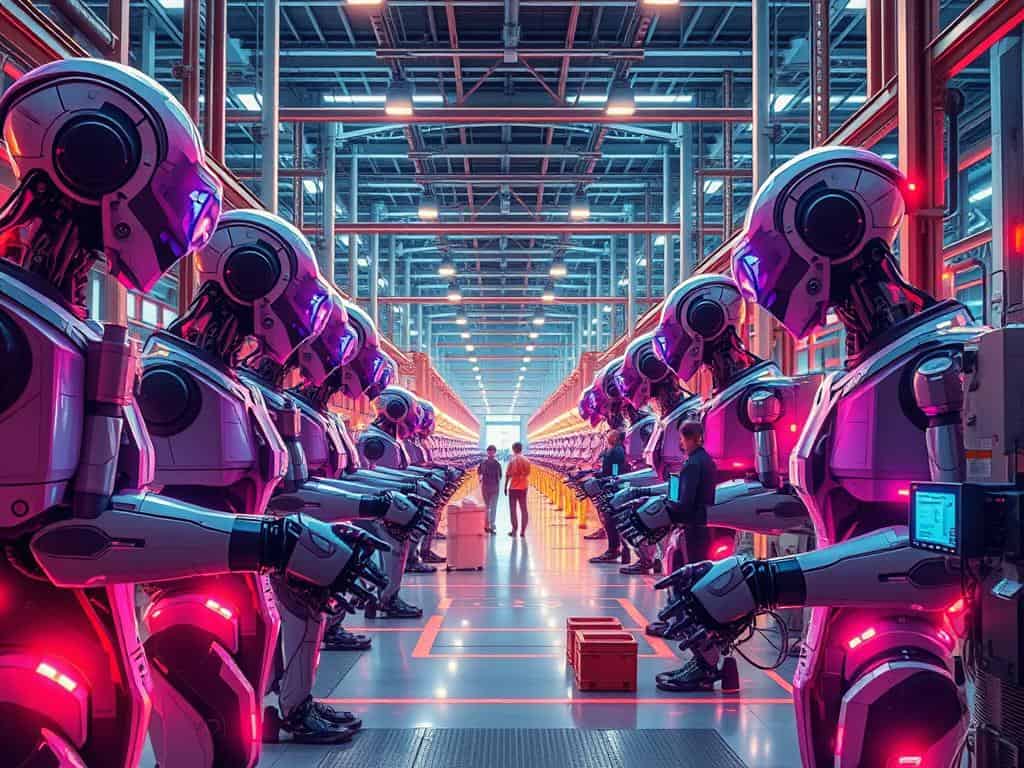
The integration of artificial intelligence with robotics is creating a new era of automation, transforming industries and revolutionizing the way we work and live. As technology advances, we’re seeing a paradigm shift in various sectors, from manufacturing to healthcare.
Advanced Robotics in Manufacturing and Service Industries
Advanced robotics are being increasingly adopted in manufacturing and service industries, enhancing efficiency and productivity. These robots are designed to perform a range of tasks, from assembly and welding to customer service and logistics.
The use of artificial intelligence in robotics is enabling these machines to operate in less structured environments, making them more adaptable and capable.
Collaborative Robots and AI-Powered Automation
Collaborative robots, or cobots, are designed with safety features that allow them to work directly alongside humans without protective barriers. This creates new possibilities for human-machine teamwork, enhancing productivity and efficiency.
AI-powered automation is being applied in various complex environments, such as research laboratories and warehouses, where flexibility and learning are essential. The use of cloud systems allows robots to share learning and experiences, accelerating capability development and adaptation across a wide range of applications.
Blockchain and Digital Trust Technologies
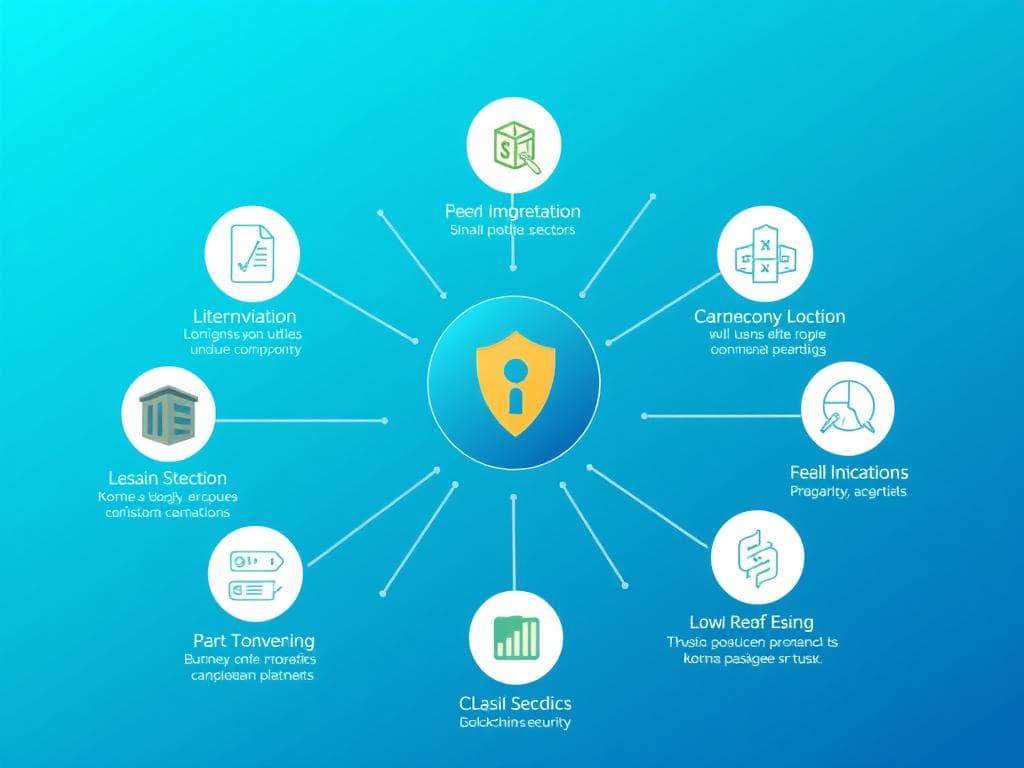
As we delve into the realm of blockchain and digital trust technologies, it becomes evident that these innovations are transforming the fabric of our digital interactions. Blockchain’s core strength lies in its ability to provide a secure, decentralized, and transparent way to conduct transactions and store data.
Beyond Cryptocurrency: Enterprise Blockchain Applications
Blockchain technology has evolved beyond its cryptocurrency roots, finding applications in various enterprise settings. It is being utilized for tracking the provenance of goods in supply chains, providing tamper-proof voting systems, and managing secure medical records. These applications highlight blockchain’s potential to enhance trust and security across different industries.
Securing Digital Transactions and Information
The cryptographic foundations of blockchain provide inherent security advantages for digital transactions through decentralization and immutable record-keeping. Technologies like zero-knowledge proofs enable secure verification without revealing sensitive information. Moreover, smart contracts automate transaction execution and enforcement, reducing the need for intermediaries while maintaining security and trust. This has a wide range of implications for how businesses operate and interact.
By leveraging blockchain, businesses can create more secure and transparent systems for managing data and conducting transactions. This not only enhances security but also fosters a new paradigm for digital trust, enabling more efficient and reliable interactions across the digital landscape.
The Enterprise Adoption Curve of Tech Innovations
The journey of tech adoption within enterprises is complex and multifaceted. As executives navigate these complexities, they must align their long-term technology adoption strategies with both their internal capacities and the external ecosystem conditions.

From Experimentation to Full-Scale Implementation
Successful adoption involves a transition from initial experimentation to full-scale implementation. This process requires building internal skills and capabilities necessary for effective technology integration. Organizations must also manage the risks associated with emerging technologies, leveraging strategies such as proof-of-concept approaches and partnership models.
To achieve this, companies should focus on creating a compelling business case that addresses both quantitative metrics, like ROI, and qualitative factors, such as market positioning and strategic alignment.
Overcoming Adoption Challenges and Uncertainties
Enterprises often face significant barriers to technology adoption, including organizational resistance to change, legacy system integration challenges, and uncertainty about return on investment. To overcome these hurdles, businesses must develop strategies that foster a culture receptive to innovation and value creation.
By understanding the external ecosystem factors, including regulatory environments, talent availability, and vendor maturity, organizations can better navigate the uncertainties inherent in adopting emerging technologies. This informed approach enables companies to make strategic decisions about investment levels and implementation timelines, ultimately driving successful adoption and realizing the full value of their technology investments.
Top 25 Emerging Tech Innovations to Watch
The future of technology is being written today, with several key innovations on the horizon that promise to revolutionize various sectors. As we look ahead, it’s essential to identify and understand the emerging trends that will shape our world.
Among the most significant developments are those expected to make a substantial impact in the near term. These innovations are not only exciting but also poised to address some of the world’s most pressing challenges.
Near-Term Game-Changing Technologies (2024-2025)
The next couple of years are expected to witness significant advancements in several tech areas. Quantum computing, for instance, is progressing toward practical applications in areas like materials science, cryptography, and complex optimization problems. This technology is still nascent but is poised to revolutionize industries by solving complex problems intractable for traditional computers.
Some of the key trends to watch include:
- Advancements in generative AI that are revolutionizing content creation and business processes.
- The expansion of 5G networks and advanced connectivity solutions that are enabling new tech possibilities.
- Breakthroughs in virtual and augmented reality that are transforming immersive experiences.
These technologies are not only enhancing existing processes but are also opening up new avenues for innovation and growth.
Long-Term Tech Innovation Forecast
Looking beyond the immediate horizon, several emerging tech trends show tremendous potential to transform industries and society over the next 3-10 years. Advanced biotechnology, including synthetic biology and gene editing, is opening new frontiers in medicine, agriculture, and materials.
Other long-term trends include:
- The evolution of neuromorphic computing and brain-computer interfaces that could fundamentally change how humans interact with technology.
- The growth of space technologies, from satellite networks to resource utilization, creating new economic and scientific opportunities beyond Earth.
To capitalize on these emerging trends, it’s crucial to have a framework for monitoring their development and determining when to increase investment as they move closer to practical implementation.
The Future Job Market in Tech Innovations
Emerging technologies are redefining the job market, creating new opportunities and challenges. As we move forward, it’s essential to understand the shifts in the tech innovation landscape.

Top 20 Emerging Tech Careers for 2025
The job market is witnessing the emergence of new careers in tech, driven by advancements in areas like AI, quantum computing, and IoT. Some of the top emerging tech careers include AI ethics specialist, quantum programmer, and IoT integration expert.
These roles require a unique blend of technical skills and domain-specific knowledge. For instance, a quantum programmer needs to have a deep understanding of quantum mechanics and programming languages like Qiskit or Cirq.
Essential Skills for the Tech Innovation Economy
In the tech innovation economy, certain skills are becoming increasingly valuable. These include machine learning, deep learning, and neural networks, as well as programming languages like Python and TensorFlow.
Moreover, skills like problem-solving, critical thinking, and collaboration are essential for success in this rapidly evolving landscape. Professionals must be adaptable and committed to continuous learning to stay ahead.
To develop these skills, individuals can pursue formal education, bootcamps, or self-directed learning paths. Building a personal skill portfolio that balances depth in core areas with breadth across technological boundaries is crucial.
How Businesses Can Leverage Tech Innovations for Growth
The key to sustained business growth lies in effectively adopting and implementing tech innovations. As we have seen, generative AI has garnered significant investments due to its advancements in text, image, and video generation. To capitalize on such innovations, businesses must develop a strategic approach.
Developing a Strategic Approach to Technology Adoption
Developing a strategic approach to technology adoption involves understanding the potential impact of various innovations on business operations. This includes assessing the value that technologies like generative AI can bring to processes such as content creation. Businesses must evaluate their readiness for implementation and identify areas where technology can drive growth.
To effectively adopt technology, companies should establish clear goals and frameworks for adoption. This involves analyzing the challenges of attributing business outcomes to specific technologies, especially when multiple innovations are implemented simultaneously.
Measuring ROI and Impact of Tech Investments
Measuring the return on investment (ROI) of tech innovations is crucial for understanding their impact on business growth. This involves developing comprehensive frameworks that capture both quantitative and qualitative impacts. Businesses must establish appropriate metrics and KPIs for different types of technology investments, considering the time dimension in technology ROI.
Leading organizations use data and analytics to continuously monitor and optimize the performance of their technology investments. By doing so, they can effectively communicate the value of tech innovations to stakeholders, from technical teams to executive leadership.
Conclusion: Embracing the Future of Tech Innovations
As we navigate the ever-changing landscape of technological advancements, it’s clear that thefutureis being shaped bytech innovations. The key technological innovations reshaping our world share common threads, from AI enhancement to increased connectivity and a sustainability focus.
The pace oftechnological changeis likely to continue accelerating, creating both challenges and opportunities for individuals, organizations, and society. The convergence of multipletechnologiesis creating exponential possibilities that are greater than the sum of individualinnovations. For instance, despite the year-on-year decreases for job postings in manytrendsfrom 2022 to 2023, the number oftech-related job postings in 2023 still represented an 8 percent increase from 2021, suggesting the potential for longer-term growth.
To thrive in this environment, it’s essential to develop a mindset that embraces continuous learning and adaptation. This includes acquiring newskillsthat are relevant to emergingtech trends. As we develop and deploy powerful newtechnologies, we must also address the ethical considerations and societal impacts.
By thoughtfully engaging withtechnological innovation, we can address our greatest challenges while creating a more prosperous and equitablefuture. This requires a strategic approach totechnologyadoption, measuring ROI, and understanding the impact oftech investments. Ultimately, embracing thefutureoftech innovationsmeans being open tochangeand leveraging it to drive growth and progress.