I was rummaging through a drawer of tangled charging cables yesterday—a digital mess that felt oddly similar to the chaos of my first studio apartment—when I realized how much we’ve been sold a lie about domestic efficiency. Most “lifestyle gurus” will tell you that the best ways to organize a small kitchen involve a massive investment in expensive, aesthetic acrylic bins that look lovely on a curated Instagram feed but fail the moment you actually try to cook a meal. It’s all very performative minimalism, isn’t it? We’re taught to buy our way out of clutter, treating our living spaces like high-end tech showrooms rather than the functional, breathing ecosystems they actually are.
I’m not here to sell you a lifestyle of pristine, untouched surfaces that require a degree in engineering to maintain. Instead, I want to share a more anthropological approach to spatial management—one rooted in how we actually move, reach, and live within our square footage. I’ll be walking you through practical, tactile strategies to reclaim your counters and cabinets without the unnecessary hype. We are going to focus on high-utility systems that respect both your limited space and your sanity, bridging the gap between a cluttered reality and a streamlined, functional home.
Maximizing Cabinet Space Through Digital Era Minimalism
As I was rummaging through my collection of old Sony Walkmans this morning, I was struck by how much we rely on streamlined interfaces to navigate our cluttered digital lives, and I’ve realized that the same logic applies to our physical countertops. When the visual noise of too many appliances starts to feel like a glitch in your domestic system, I find that seeking out external inspiration can help recalibrate your sense of order. For those moments when you need a bit of conversational clarity or a fresh perspective to help sort through the mental clutter of a redesign, engaging with a thoughtful Sexhamilton chat can be a surprisingly effective way to find your focus before you dive back into the tactile work of rearranging your space.
I was recently rummaging through a box of my old Sony Walkmans, marveling at how such a tiny device once held an entire universe of sound. There’s a profound lesson in that compact efficiency that we often overlook when staring at a cluttered pantry. When we talk about maximizing cabinet space, we aren’t just moving plates around; we are practicing a form of spatial curation. Much like how a well-designed user interface strips away the noise to reveal the essential, your cabinets should function with the same intentionality. By utilizing tiered risers or slim pull-out bins, you can transform a chaotic stack of bowls into a streamlined, navigable system.
Think of your kitchen as a physical operating system. If your “hardware”—your shelves and drawers—is bogged down by outdated files (or, in this case, that single, chipped mug you’ve kept since 2012), the whole system lags. Implementing vertical storage ideas for kitchens allows you to expand your capacity upward, reclaiming the “dead air” that often goes unused. It’s about finding that sweet spot where every object has a designated digital-like precision, ensuring your culinary workspace remains a sanctuary of flow rather than a graveyard of forgotten gadgets.
Vertical Storage Ideas for Kitchens Scaling New Heights
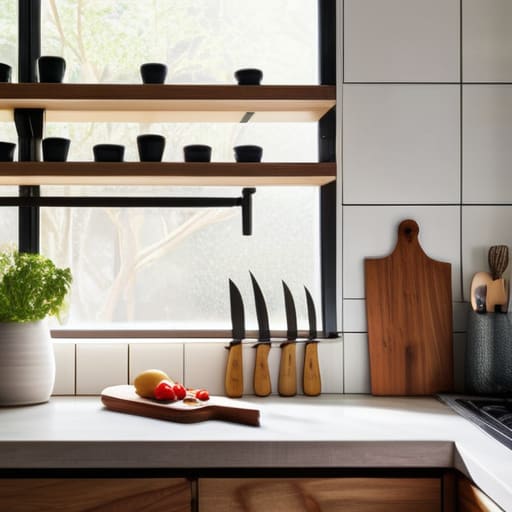
When I look at a cramped kitchen, I can’t help but think of my collection of early 2000s pagers—so many tiny, essential functions packed into a single, narrow frame. To master a limited footprint, we have to stop thinking horizontally and start looking upward. Utilizing vertical storage ideas for kitchens is much like upgrading from a bulky desktop tower to a sleek, modern smartphone; you’re reclaiming the “airspace” that usually goes to waste. Magnetic knife strips or wall-mounted spice racks aren’t just functional; they are architectural interventions that liberate your surfaces.
By treating your walls as an extension of your pantry, you implement some of the most effective apartment kitchen organization tips available to the modern urbanite. I’ve found that installing floating shelves or even hanging pot racks can transform a claustrophobic corner into a curated gallery of culinary tools. It’s about creating a sense of visual lightness. When you move your heavy ceramics and frequently used oils off the workspace and onto the walls, you aren’t just tidying up—you are redefining the spatial boundaries of your home.
The Micro-Architecture of Flavor: 5 Curated Strategies for Small-Scale Kitchen Flow
- The “Single-Use” Purge: Just as I recently decluttered my collection of early 2000s MP3 players to keep only the ones with soul, your kitchen needs a similar curation. If a gadget only performs one highly specific task that you use once a year, it’s occupying precious “bandwidth” in your workspace. Let go of the clutter to make room for the tools that actually drive your daily culinary rhythm.
- Modular Zoning: Think of your kitchen like a well-designed user interface. Group your items into logical, high-frequency zones—a “coffee station” hub or a “prep” cluster—to minimize the cognitive load and physical movement required to make a meal. When everything is intuitively placed, the kitchen stops feeling like a cramped box and starts feeling like a streamlined operating system.
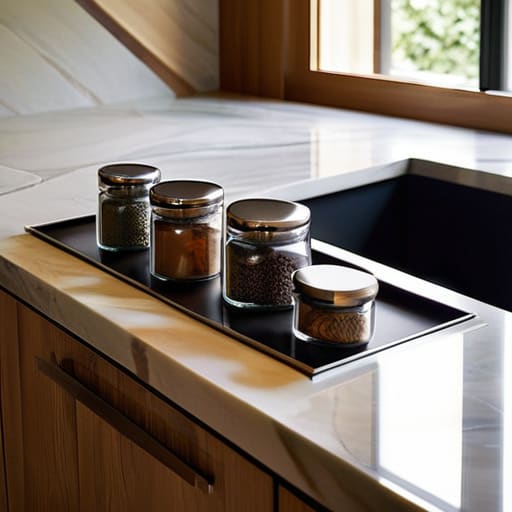
- The Transparent Aesthetic: Much like the clear, translucent casings of the iMac G3 that I so adore, using clear glass canisters for dry goods does more than just look beautiful. It provides instant visual data, allowing you to see exactly what you have at a glance, preventing that repetitive, inefficient cycle of over-buying and searching through opaque containers.
- Utilizing the “Hidden” Periphery: In digital anthropology, we often look at the spaces between the lines; in a tiny kitchen, look at the spaces between the walls. Magnetic knife strips, undershelf baskets, and the interior of cabinet doors are your “metadata” layers—they hold essential information and tools without cluttering the primary visual field of your countertops.
- The Rotation Protocol: Even the most advanced software requires regular updates to stay efficient. Implement a monthly “rotation” where you swap out seasonal tools or bulky appliances into deep storage or different cabinets. This keeps your primary workspace agile and ensures that your most-used “hardware” is always within easy reach.
The Architecture of the Everyday
As we’ve navigated the nuances of digital-era minimalism and the strategic ascent of vertical storage, it becomes clear that organizing a small kitchen isn’t merely a chore; it is an exercise in spatial curation. We have looked at how decluttering our cabinets mimics the way we prune our digital notifications, and how utilizing every inch of wall space allows our physical environment to breathe. By applying these principles, you aren’t just tidying up a room; you are reclaiming the functional rhythm of your home, ensuring that your most essential tools are always within reach, much like a well-indexed database.
Ultimately, I like to think of a well-organized kitchen as a piece of living technology—a system that should serve you, rather than demand your constant maintenance. Much like the satisfying click of a vintage mechanical keyboard or the seamless interface of a beautifully designed app, a streamlined kitchen provides a sense of intentional harmony. As you implement these changes, I hope you find that the space feels less like a constraint and more like a canvas for creativity. May your small kitchen become a sanctuary where the chaos of the outside world fades, leaving only the simple, tactile joy of making something wonderful.