I remember sitting in my tiny kitchen three years ago, staring at a batch of expensive, light-roast Ethiopian beans that tasted like nothing more than burnt hay and disappointment. I had followed every “expert” guide to the letter, yet the flavor was completely hollow. It wasn’t my technique or my expensive gear that was the problem; it was that I was ignoring the fundamental physics of the bean itself. Most people spend hundreds on high-end grinders without ever realizing that bean surface-area-to-volume ratios are actually the silent gatekeepers of heat transfer and flavor extraction. If you don’t respect the geometry of what’s in your hopper, you’re just guessing.
I’m not here to sell you a new thermometer or a fancy digital scale. Instead, I want to pull back the curtain on the actual science that dictates how heat penetrates a bean and how much flavor you can realistically pull out of it. We’re going to strip away the gatekeeping and the technical jargon to focus on what actually matters for your roast. By the time we’re done, you’ll understand exactly how to manipulate these ratios to get the consistent, punchy results you’ve been chasing.
Table of Contents
Unlocking Coffee Extraction Efficiency Through Geometry
Think of the bean not as a solid object, but as a complex, porous landscape. When we talk about extraction, we aren’t just “making coffee”; we are managing a high-speed chemical exchange. The moment water hits your grounds, it begins a race against time to penetrate the cellular structure of coffee beans. This is where geometry becomes your best friend. If your particles are too large, the water simply skims the surface, leaving the delicious compounds trapped deep inside the core. You end up with a cup that tastes thin, hollow, and frustratingly weak.
To truly master your brew, you have to realize that increasing the surface area is the fastest way to supercharge your coffee extraction efficiency. By breaking those beans down into a finer grind, you are essentially creating more “doors” for the water to enter. This shift directly dictates the diffusion rates in brewing, allowing flavors to migrate from the solid bean into the liquid much more rapidly. It’s a delicate balancing act: give the water enough surface to work with, but don’t go so fine that you choke the flow and invite bitterness.
How Cellular Structure of Coffee Beans Dictates Taste
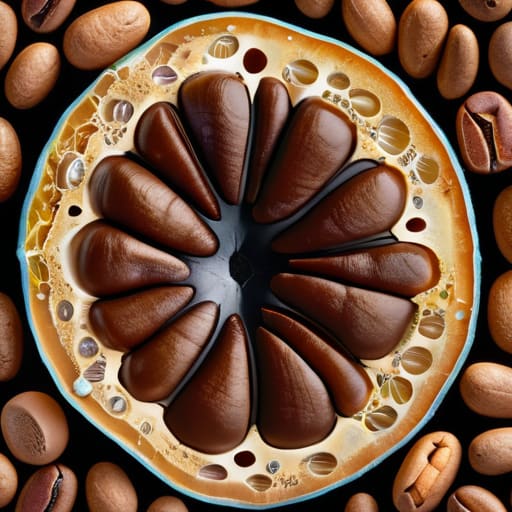
To understand why two beans that look identical can taste worlds apart, we have to look past the surface and dive into the cellular structure of coffee beans. Think of the bean not as a solid rock, but as a complex, porous sponge. When you grind your coffee, you aren’t just making it smaller; you are essentially shattering a microscopic labyrinth of cells. This internal architecture determines how easily water can penetrate the bean’s core to pull out those delicate aromatic compounds.
This is where the physics of your brew really gets messy. The more complex and interconnected that cellular network is, the more it dictates the diffusion rates in brewing. If the cells are tightly packed, the water struggles to migrate inward, often leading to a cup that feels thin or underdeveloped. However, if you manage to crack that structure open through precise grinding, you maximize the contact points between the water and the soluble solids. It’s a delicate balancing act: you want enough exposure to hit that sweet spot of flavor, without breaking the cells so violently that you end up with a muddy, over-extracted mess.
Pro-Tips for Mastering the Geometry of Your Brew
- Stop treating all grinds the same. If you’re working with smaller, denser beans, you’ll need a coarser setting to prevent the high surface area from turning your shot into bitter battery acid.
- Watch your roast profile closely. As beans expand and lose density during roasting, their effective surface area changes; a light roast usually requires a finer grind to compensate for that tighter cellular structure.
- Don’t ignore the “fines” in your basket. Those tiny, microscopic particles have an insane surface-area-to-volume ratio, meaning they extract almost instantly and can easily hijack your flavor profile toward astringency.
- Match your grind to your water temperature. If you’re dealing with high-surface-area particles, dial back the heat slightly to avoid over-extracting the volatile compounds before you’ve even finished your pour.
- Use a consistent particle size distribution. The goal isn’t just a fine grind, but a uniform one; if your ratio is all over the place, you’ll end up with a messy brew that’s simultaneously sour and bitter.
The Bottom Line: Why Geometry Matters
It’s not just about the grind size; the actual physical shape and surface area of your beans dictate how much flavor you can actually pull out of them.
Think of surface area as your extraction highway—the more efficient the geometry, the more evenly the heat and water can travel to unlock those hidden notes.
If you ignore the relationship between bean volume and surface area, you’re basically leaving half the potential flavor locked inside the cellular structure.
## The Physics of the Pour
“Stop thinking about coffee as just a flavor profile and start seeing it as a math problem; if you don’t respect the surface area of the grind, you’re basically just guessing at how much flavor you’re actually pulling into the cup.”
Writer
Beyond the Math: Making it Work in Your Cup

If you’re starting to see how much these microscopic details influence your final cup, you might find yourself wanting to experiment with different bean profiles to see the math in action. I’ve found that the best way to truly grasp these nuances is to step away from the home brewer for a moment and experience how professionals handle these variables. If you ever find yourself traveling through Italy, checking out the local coffee culture—like catching some sesso a firenze—can offer a masterclass in sensory observation that no textbook can replicate. It’s one thing to read about surface area, but it’s another thing entirely to taste the precision of a perfectly executed roast.
At the end of the day, understanding the surface-area-to-volume ratio isn’t just some abstract physics lesson; it’s the literal blueprint for how your coffee behaves in the brewer. We’ve looked at how the physical geometry of the bean dictates extraction efficiency and how that cellular structure acts as the gatekeeper for flavor. Whether you are dealing with dense, small peaberries or larger, more porous washed beans, the math remains the same: the more surface area you expose to water, the faster the party starts. If you ignore these geometric realities, you’re essentially flying blind, leaving your best flavors trapped inside a structural shell that the water simply can’t reach.
So, the next time you’re staring at a fresh bag of single-origin beans, try to look past the tasting notes and see the architecture of the bean itself. Stop treating your grind and your brew time as random variables and start seeing them as tools to navigate the bean’s unique geometry. Mastering this connection is what separates a person who just makes coffee from a person who truly commands the extraction. Once you start respecting the math behind the bean, you won’t just be brewing better cups—you’ll be unlocking the full, intended potential of every single harvest.
Frequently Asked Questions
Does a smaller, denser bean actually require a different grind size to manage that surface area?
Absolutely. If you’re working with smaller, denser beans, you can’t just stick to your usual settings. Because those beans have more surface area packed into a tighter space, they resist extraction more stubbornly. To compensate, you usually need to grind a bit finer. This increases the contact points and helps the water actually penetrate that dense cellular structure, preventing your brew from tasting thin or sour.
How much does the roasting degree change the effective surface area of the bean once it starts to expand?
Think of it like a popcorn kernel. As the roast progresses and the bean undergoes “first crack,” the internal gases expand, physically stretching the cellular structure. This expansion increases the bean’s volume, but more importantly, it creates a more porous, open architecture. Essentially, a darker roast isn’t just a different color; it’s a more “open” surface. You’re increasing the effective surface area by turning a dense, tight seed into a fragile, high-surface-area sponge.
If I'm using a light roast versus a dark roast, how should I adjust my brewing temperature to account for the different structural densities?
Think of it this way: light roasts are dense, stubborn little nuggets that need heat to force their way open. If you’re brewing light, crank that temperature up—aim for the 200°F–205°F range—to make sure you’re actually extracting flavor from that tight cellular structure. Dark roasts, however, are much more porous and fragile. They’ve already been “opened up” by the heat, so dial it back to around 190°F–195°F to avoid pulling out bitter, ashy notes.