
Did you know that nearly 51% of Americans overspend on vacations? They often face unexpected costs of about $1,500. This shows how vital it is to plan your travel budget well.
Knowing the total costs of your trip is key. This includes airfare, lodging, meals, activities, and insurance. With prices rising due to inflation, sticking to a budget is more important than ever. It helps avoid financial stress and makes saving easier.
To plan better, research the costs of your destination. Look at seasonal price changes too. And find ways to save that work for you.
Key Takeaways
- Identify all expected costs of your trip for accurate budgeting.
- Research average prices for flights and accommodation in advance.
- Monitor seasonal price changes to optimize your travel timing.
- Establish a daily spending limit to control overall expenses.
- Utilize expense tracking tools to keep your budget in check.
Understanding the True Cost of Your Vacation
To manage my travel budget, I first need to know the real cost of my vacation. I look into the average costs of my destination. These costs vary a lot, depending on the local economy and exchange rates.
Knowing these factors helps me prepare financially. It also lets me make the most of my budget.
Research Average Costs for Your Destination
Before I go, I research the costs of staying, eating, and doing things in my destination. Some places are cheaper, which means I can enjoy my trip without spending too much. I also check when to book flights, as prices change a lot.
Consider Seasonal Prices
Seasonal prices are key to my budgeting. I look for travel dates outside peak season to save on flights and hotels. Prices go up a lot during busy times, like holidays or big events.
Being flexible with my travel dates helps me find cheaper options. This way, I can save money by traveling during off-peak times.
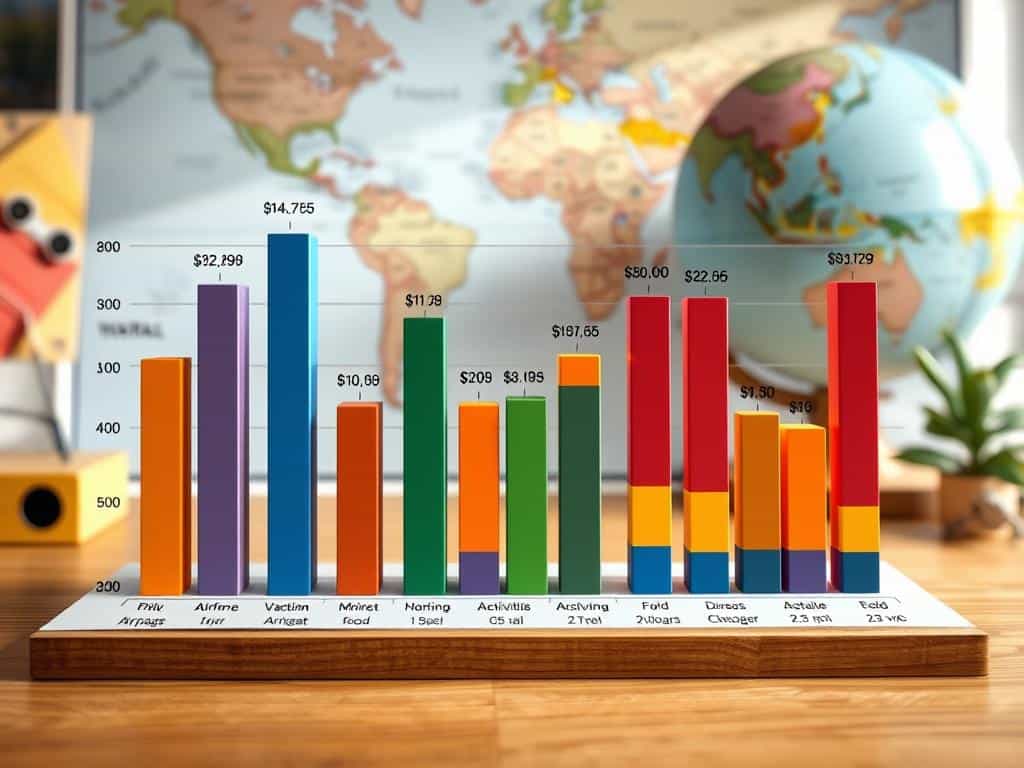
Key Strategies for Effective Travel Budgeting
Planning my dream vacation means using smart budgeting strategies. Setting a daily spending limit and tracking expenses are key. These steps help me stay on track and enjoy my trip more.
Set a Daily Spending Limit
Setting a daily spending limit is a game-changer for me. It keeps my finances in check and shows me how much I can spend each day. I can plan my budget for busy days and be flexible on quieter ones.
Utilize Expense Tracking Tools
Using expense tracking tools is a big help. Apps and spreadsheets let me keep an eye on my spending. I can see where my money goes and find ways to save. This way, I can make the most of my trip without overspending.
Conclusion
Effective travel budgeting is key to making my vacation dreams come true. It’s not just about cutting costs. It’s about planning smart and setting clear financial goals.
Understanding the true costs and researching average expenses for my destination is important. This helps me prepare for what’s ahead.
Seasonal pricing is also a big part of my planning. Setting a daily spending limit keeps me on track. Using expense tracking tools helps me see where my money goes.
These strategies help me enjoy my travels without worrying about money. They make my travel plans sustainable and fun.
With good travel budgeting, I can enjoy my vacation and save for more adventures. My financial planning is like a roadmap to memorable experiences. It makes every trip a special part of my life.