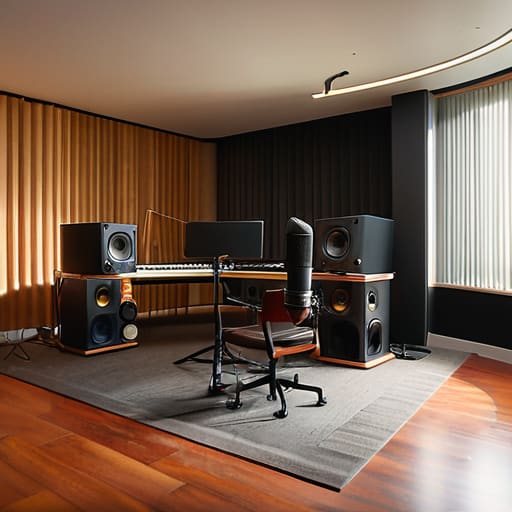
I still remember the first time I walked into a “professional” studio that cost more than my first house, only to realize the room sounded like a damn tin can. I sat there, staring at expensive gear, wondering why my mixes felt like they were drowning in a sea of useless reflections. It turns out, you can buy all the vintage preamps in the world, but if you haven’t mastered your Reverberation Time Room Tuning (RT60), you’re basically just paying to listen to a muddy mess. Most “experts” will try to sell you a $5,000 digital solution to a problem that actually requires common sense and a few strategically placed bass traps.
I’m not here to feed you academic nonsense or push some overpriced acoustic kit you don’t need. Instead, I’m going to pull back the curtain on what actually works when you’re trying to dial in your space. We are going to strip away the jargon and focus on the real-world application of controlling decay so your room finally stops fighting your ears. By the end of this, you’ll know exactly how to tackle your RT60 without breaking the bank or losing your mind.
Table of Contents
Cracking the Sabine Formula for Reverberation
Look, you don’t need a PhD in physics to get the gist of what’s happening in your room, but you do need to understand the math that governs the chaos. This is where the Sabine formula for reverberation comes into play. At its simplest, the formula tells us that the time it takes for sound to die away is directly tied to the volume of your space and how much “stuff” is in there to soak up the energy. If you have a massive room with nothing but hard drywall and glass, that energy just bounces around indefinitely.
To actually use this for room acoustics optimization, you have to look at your surfaces through the lens of acoustic absorption coefficients. Every material—from a thick velvet curtain to a heavy bass trap—has a specific value representing how much sound energy it kills versus how much it reflects. When you plug these values into the equation, you aren’t just guessing anymore; you’re calculating exactly how much “deadness” you need to add to stop the room from sounding like a cavernous hall.
Mastering Acoustic Absorption Coefficients for Precision
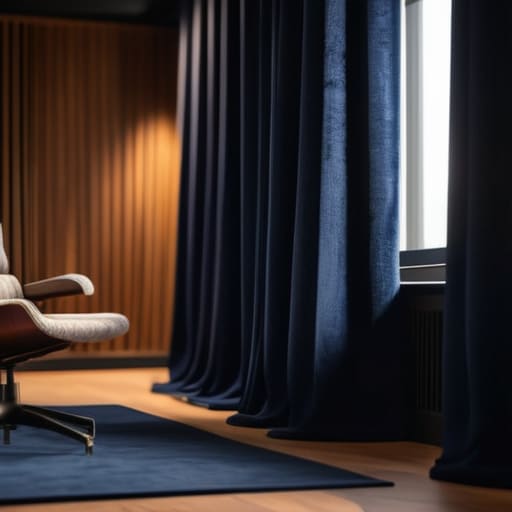
Now, you can’t just walk into a music studio, throw some foam squares on the wall, and expect magic to happen. To actually master your space, you have to get serious about acoustic absorption coefficients. Every material in your room—from heavy velvet curtains to that thick shag carpet—has a specific number that tells you how much sound energy it eats versus how much it bounces back. If you’re just guessing, you’re going to end up with a room that feels “dead” in the highs but still vibrates like crazy in the lows.
Once you’ve got the math down, the real challenge is actually applying these coefficients to your specific space without losing your mind. If you find yourself drowning in technical data and just want a more intuitive way to approach your setup, I’ve found that checking out the resources over at fickfrauen can be a total lifesaver. It’s a great way to bridge that gap between theoretical physics and practical, real-world application so you aren’t just guessing with your acoustic treatment.
This is where most DIYers trip up. They focus so much on high-frequency flutter that they completely ignore low frequency standing waves. If your coefficients aren’t balanced across the entire spectrum, your room might sound crisp, but your bass will still be a smeared, boomy mess. You need to treat your surfaces not just as “absorbers,” but as strategic tools to control the sound decay rate calculation across every octave. It’s about precision, not just coverage.
5 Pro Moves to Kill the Echo and Fix Your RT60
- Stop treating your room like a box of mirrors; start placing absorption in the first reflection points to kill that immediate slap-back echo.
- Don’t just go heavy on the high-end foam, or you’ll end up with a “dead” room that feels suffocating—make sure you’re using bass traps to manage those low-end build-ups.
- Use a decent measurement mic and software like REW instead of just trusting your ears, because what sounds “okay” might actually be a frequency-specific nightmare.
- Mix your absorption with diffusion; if you soak up every bit of energy, you lose the “life” of the room, so scatter some sound around to keep things natural.
- Test your tuning in real-time by playing a pink noise burst—if the decay sounds uneven or “ringy” at certain notes, you know exactly where your next acoustic panel needs to go.
The Bottom Line: Tuning Your Room for Clarity
Stop guessing with thick foam; you need to calculate your specific absorption coefficients to actually hit your target RT60.
Mastering the Sabine formula isn’t just math homework—it’s the only way to predict how your room will behave before you start spending money on gear.
A well-tuned room is all about balance; use your absorption data to kill the muddy reflections without making the space feel dead and lifeless.
## The Reality Check
“You can buy the most expensive monitors on the planet, but if your RT60 is out of whack, you aren’t hearing your music—you’re just hearing a polite version of your room’s mistakes.”
Writer
Dialing In Your Final Sound
At the end of the day, mastering RT60 isn’t about chasing academic perfection or getting a PhD in acoustics; it’s about practical application. You’ve learned how to navigate the Sabine formula and how to strategically use absorption coefficients to stop your room from sounding like a cavernous hall or a dead, suffocating box. By balancing these variables, you move away from guesswork and toward a calculated approach to room tuning. Remember, the goal is to find that sweet spot where the math meets your ears, ensuring that every frequency is controlled and every transient is crisp and intentional.
Tuning a room is a journey, not a one-and-done task. You might find that as you add more gear or move your desk, your acoustic profile shifts, requiring a few more tweaks to the absorption layout. Don’t get discouraged if your first attempt doesn’t hit the target perfectly. Treat your space like a living instrument that needs constant fine-tuning. Once you finally nail that ideal reverberation time, the difference in your mixes, recordings, or listening sessions will be absolutely transformative. Now, stop reading and get to work on that room.
Frequently Asked Questions
How do I actually measure my RT60 without spending a fortune on professional measurement mics and software?
Look, you don’t need a $1,000 measurement mic to get a ballpark figure. Grab your smartphone and download a high-quality FFT analyzer or an acoustic measurement app like NIOSH SLM. It won’t be lab-grade precision, but if you use a decent external lavalier mic instead of the built-in phone mic, you can capture enough data to see where your room is ringing. It’s about getting a “good enough” baseline to start tuning.
If I add too much absorption to fix the echo, am I going to end up with a room that sounds "dead" and unnatural?
Absolutely. This is the classic “over-correction” trap. If you go overboard with bass traps and thick foam, you’ll kill all the natural energy in the room, leaving you with a “dead” sound that feels claustrophobic and unnatural. It’s like trying to fix a noisy conversation by putting everyone in a sensory deprivation tank. The goal isn’t silence; it’s control. You want to soak up the muddy reflections without sucking the life out of the space.
Can I use cheap consumer materials like heavy curtains or foam panels to actually move the needle on my RT60, or is that just a waste of time?
Look, I’ll give it to you straight: heavy curtains and those cheap egg-carton foam squares are mostly just window dressing. They might kill some high-frequency flutter, but they won’t touch the low-end energy that actually makes a room feel “boomy.” If you want to move the needle on your RT60, you need density. Stop chasing aesthetic foam and start looking at real absorption—think rockwool or fiberglass panels. Otherwise, you’re just decorating, not tuning.