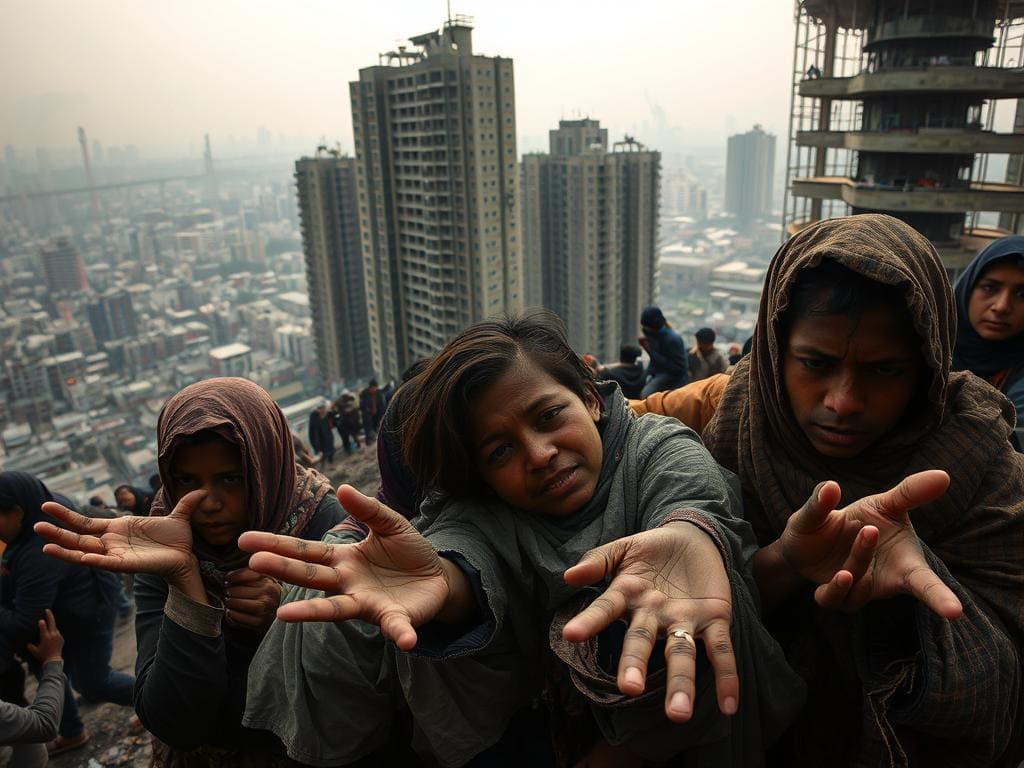
Last summer, I was at a local café when a conversation caught my attention. A stranger at the next table talked about her work with an NGO in Southeast Asia. Her stories highlighted the ongoing struggle against global poverty, affecting millions by 2025.
It became clear that while some solutions show promise, many obstacles remain. Economic instability, conflict zones, and climate change are just a few challenges. These issues make the need for effective development aid more urgent than ever.
This made me want to learn more about what really works and what doesn’t in fighting global poverty. I wanted to understand the strategies that are effective and where we need to improve.
Key Takeaways
- Global poverty is a pressing issue affecting millions worldwide.
- Poverty solutions must evolve to address complex challenges.
- Development aid plays a critical role in poverty eradication strategies.
- Community engagement is vital for effective poverty interventions.
- Education and sustainable practices are key in combating poverty.
- Numerous barriers exist that hinder progress against poverty.
The State of Global Poverty in 2025
Looking at global poverty in 2025, the picture is grim. Over 700 million people, or about 1 in 11, face hunger every day. This shows how widespread food insecurity is, affecting health and the economy.
Current Statistics and Trends
Malnutrition is a major cause of death in children, showing poverty’s harsh impact. Poverty levels have not improved much, mainly due to economic troubles. Half of the world’s poor live in Sub-Saharan Africa and conflict zones.
The COVID-19 pandemic, rising debt, and climate change add to the challenges. These factors make it hard to make progress against poverty.
Challenges Faced
One big problem in fighting poverty is the lack of data. Only about half of countries have the data needed to track poverty. This makes it hard to make policies and helps poverty persist, leaving many without help.
What’s Working to Combat Global Poverty?
Looking at global poverty in 2025, we see positive changes happening. Many efforts are working to help people and families. These initiatives aim to create lasting growth and development.
Effective Solutions and Initiatives
The World Bank is working on inclusive economic growth. They focus on creating jobs and helping those in need. Their efforts are helping areas with economic problems.
Programs like Community Management of Acute Malnutrition (CMAM) are making a big difference. They are recognized for being very effective in fighting malnutrition worldwide.
Community-Based Approaches
Community efforts are key in changing local economies. They focus on starting small businesses and teaching about nutrition. This helps make food more secure for those who need it most.
Programs like Lifesaving Education and Assistance to Farmers (LEAF) are also making a difference. They help reduce the need for emergency aid. Local strategies are showing the strength of working together to fight poverty.

What’s Not Working in the Fight Against Global Poverty?
In the fight against global poverty, we face big challenges. Gaps in data and how we use resources hold us back. Without full data, we can’t find who needs help most, leading to wrong policies.
Many communities are left behind, stuck in poverty. Their real needs are often ignored.
Gaps in Data and Resource Allocation
Our efforts to fight poverty are often hampered by lack of resources and bad data. The poverty gaps make it hard to find good solutions. Without the right data, we can’t target our help well.
This means those who need it most are often left out. It also leads to strategies that don’t really work.
The Growing Hunger Crisis
The hunger crisis is getting worse in many places. Food shortages are hitting hard, making things worse for poor areas. This problem is not just about food running out.
It’s also about bad farming and failed development plans. In Africa, 1 in 5 people are hungry because of these issues. We must tackle the hunger crisis to truly fight poverty.
Conclusion
The battle against global poverty is tough, but we have solutions and gaps to tackle. Looking at the data, we see that without good information and quick help, our fight against poverty won’t succeed. It’s key for world leaders to focus on solving poverty and use resources wisely to help those in need.
It’s good to know we’ve helped over 1 billion people escape poverty in the last 30 years. But, the goal of ending poverty seems even bigger now. To keep moving forward, we must work together and include everyone in our plans. This way, we can tackle poverty’s many sides more effectively.
Learning from our successes and failures will help us move forward. We must keep improving how we fight poverty and use our resources well. Our goal is to make a world where poverty is just a memory, not a constant problem.