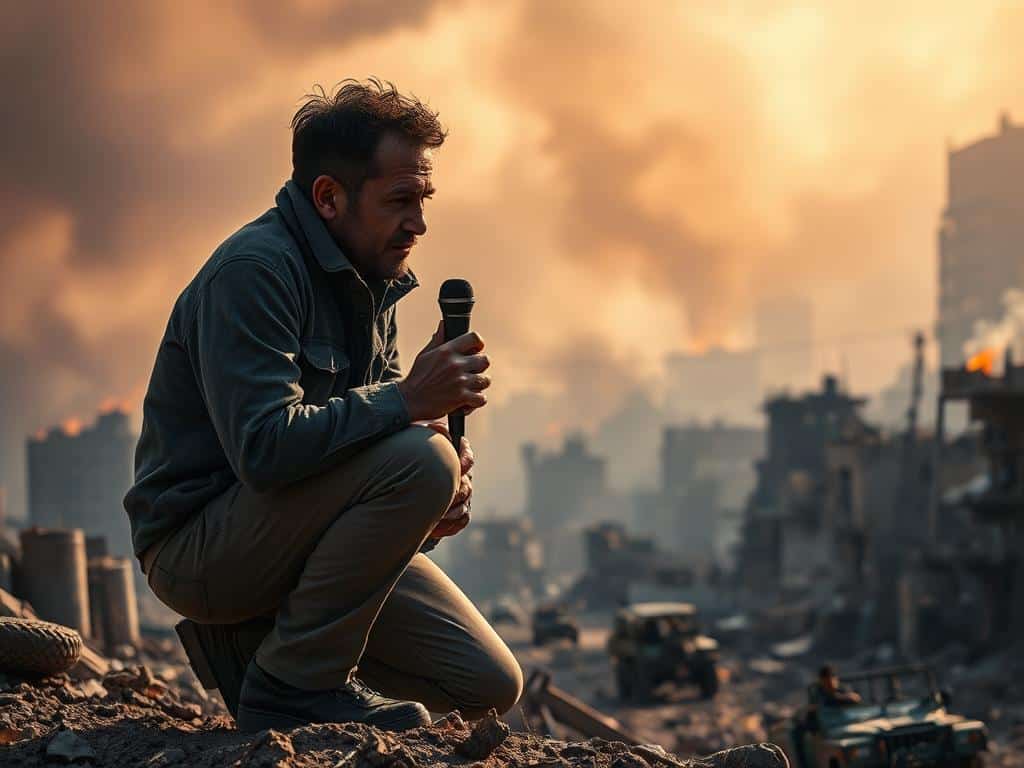
Standing at the edge of a makeshift camp in a war-torn city, I heard the sound of artillery in the distance. It was a haunting reminder of the chaos around us. In those moments, I realized that what I was seeing was more than just destruction. It was a display of human strength in the face of great hardship.
Conflict journalism is not just about sharing facts. It’s about telling the human stories that come out of turmoil. Every day in these dangerous places brings new challenges. But it’s through these experiences that I understand fear, hope, and survival better.
I was surrounded by people whose lives had been forever changed. Their struggles made me want to share their stories with the world. This balance between doing my job and facing risks makes the journey hard but also very enlightening.
Key Takeaways
- War reporting provides unique insights into human resilience.
- Conflict journalism goes beyond facts to tell vital personal stories.
- Experiences in conflict zones shape a deeper understanding of fear and hope.
- The risks involved in reporting create a delicate balance between duty and safety.
- Personal interactions with locals often reveal unexpected narratives.
The Allure of War Reporting
War reporting draws many journalists to the front lines. It promises adventure and the chance to tell important stories. This field offers dramatic tales and chances for personal growth and professional development in conflict zones.
Being part of these experiences shows the deep responsibility of witnessing human strength in hard times.
Personal Satisfaction and Professional Growth
Reporting in conflict zones gives me a sense of purpose. I find joy in sharing the stories of those facing huge challenges. Their courage motivates me to tell more stories.
Every assignment helps me understand people better. It also helps me grow professionally. I learn skills like empathy and making tough decisions.
The Thrill: Experience Life in Extremes
The excitement of war reporting comes from the extreme situations. These high-risk places make me think deeply about ethics and global issues. My experiences have changed my views and shown me life’s strength and weakness.
Meeting incredible people in tough times makes me want to share their stories. It turns fear and chaos into stories of hope and strength. This journey keeps me connected to journalism and ready for anything.
The Dangers of Reporting from Conflict Zones
Reporting from conflict zones is full of challenges. Journalists must always be on guard. Every assignment comes with risks that can change fast.
Physical and Mental Risks
The dangers in conflict areas are real. I’ve seen artillery fire, stray bullets, and sudden riots. Every moment is a risk to life.
Physical injuries from explosions or gunfire are a big worry. They can hurt journalists and make it hard to do their job.
The mental toll is also huge. Seeing trauma, violence, and suffering can lead to PTSD and anxiety. Many journalists suffer from burnout after seeing too much chaos.
Staying Safe Amid Chaos
Keeping journalists safe is key. Training teaches them how to stay safe in hostile areas. It also helps them spot misinformation and follow safety rules.
Having a network of contacts helps too. It adds a layer of protection in uncertain times. Knowing the local scene and escape routes is also important.
By staying alert and focusing on safety, journalists can manage risks. Each safety step helps them stay safe and do their job well.
Challenges in War Reporting
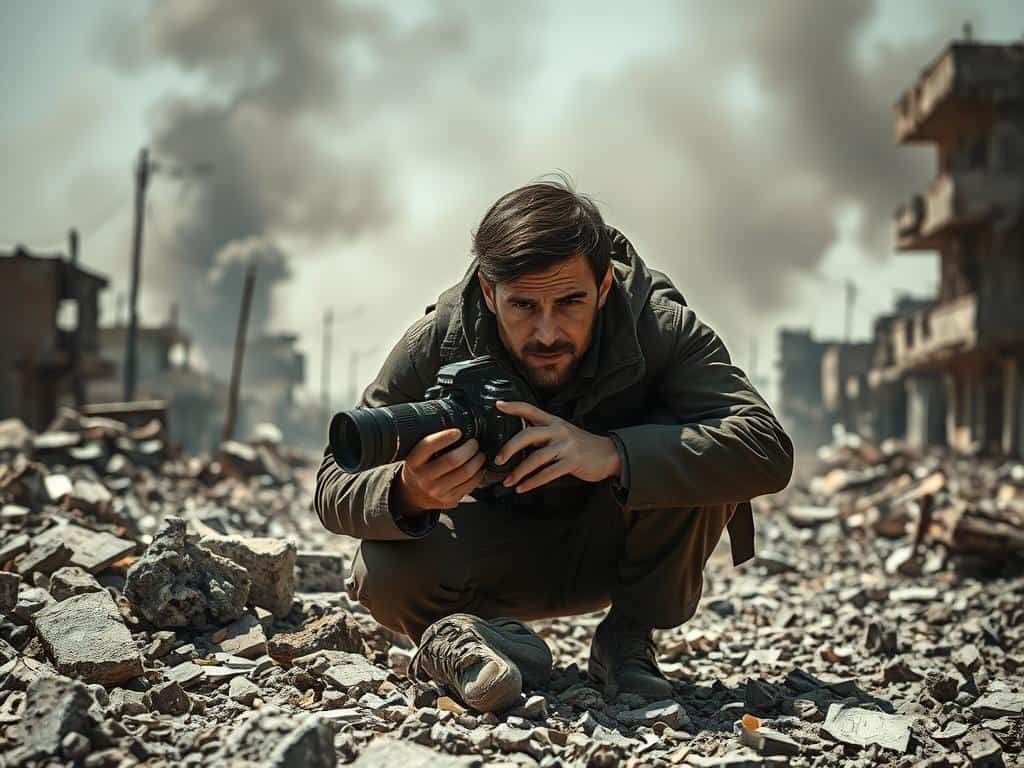
In war reporting, the big challenge is telling fact from fiction in chaotic places. I face a tough job as I try to sort out truth from rumors. Local biases also make it hard to stay true to journalism.
It’s tough to keep reports accurate. Sometimes, people think I’m biased against certain groups. This makes my job even harder.
Fact vs. Fiction in Unstable Environments
Every day, I face new challenges in finding the truth. Seeing things myself doesn’t always mean I can report them objectively. The stories I tell are shaped by the people around me.
My reports carry a lot of weight. I have to check every detail to make sure I’m not spreading false information. This helps clear up misunderstandings.
The Emotional Toll of Reporting
Reporting on conflicts takes a big toll on my mental health. I hear about a lot of suffering and bravery. This makes me feel many emotions.
I have to balance my feelings with staying objective. But these feelings drive me to tell stories that matter. I aim to show the real human side of things while staying detached.
Conclusion
Reflecting on my time in war reporting, I see it’s not for the weak. It’s a mix of danger and allure, with big challenges and emotional costs. My experiences on the front lines have changed me, giving me a new view on humanity.
These experiences have made me more determined to share important stories. They show the need for us to tell the stories that matter most.
The future of war reporting depends on keeping journalists safe and healthy. With so much fake news around, we must be careful and honest in our stories. This way, we can make sure the voices from these hard places are heard.
This job is more than just telling stories. It’s a light in the dark, showing us the human side of chaos. I’m committed to sharing stories that bring people together, even in tough times. My goal is to make sure the truth shines through, no matter what.