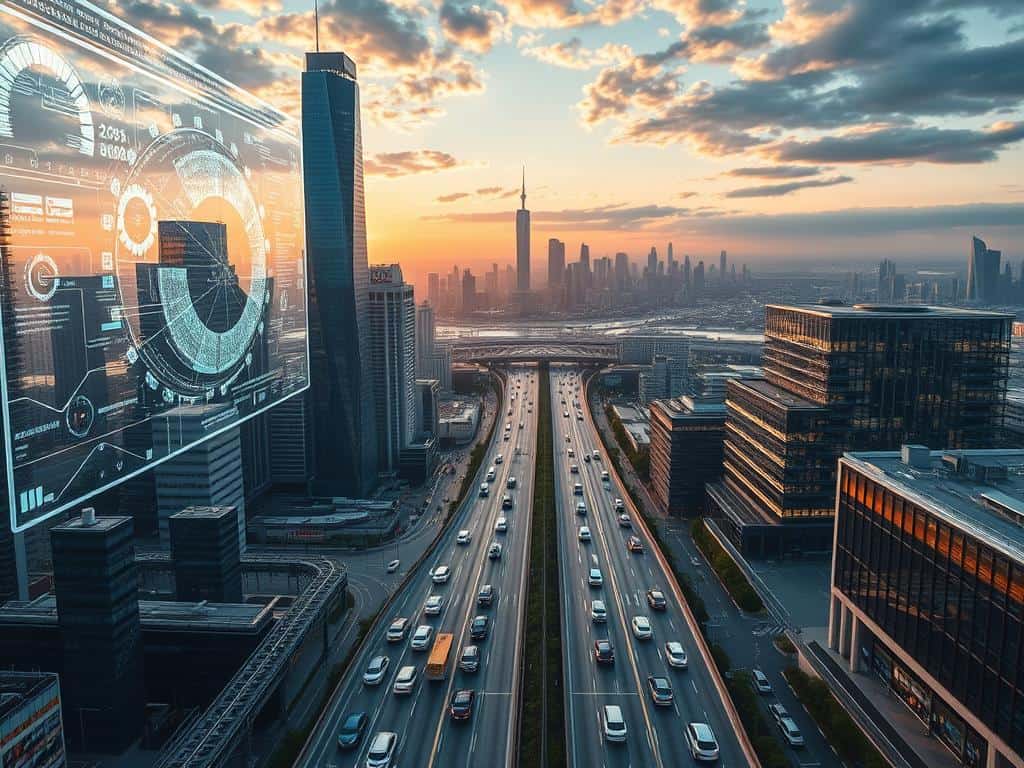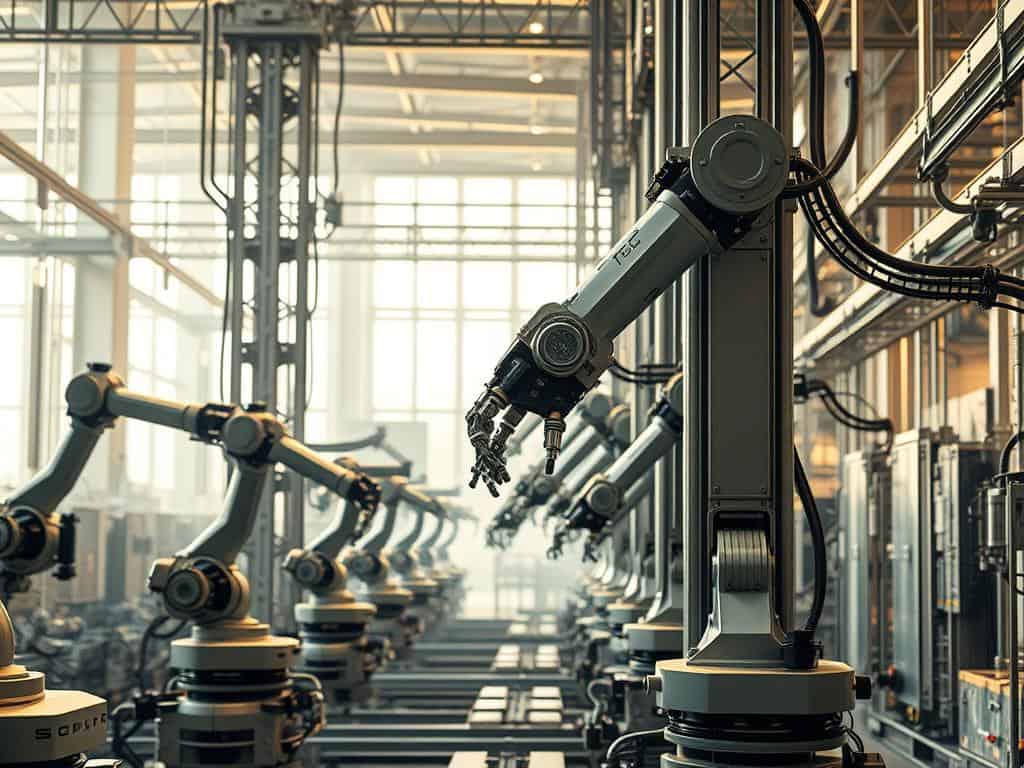
The world of robots is rapidly evolving, with automation becoming an integral part of various industries.
Did you know that the global robotics market is projected to grow significantly, driven by advancements in technology and the increasing demand for efficient systems? As we explore the field of robotics, it becomes clear that this interdisciplinary study is revolutionizing the way we work and interact with machines.
I will introduce you to the fascinating world of robotics, explaining its core components, from the design and construction of physical robot structures to the complex algorithms that power them.
Key Takeaways
- Understanding the basics of robotics and its applications
- The role of mechanical engineering and computer science in robotics
- How robotics is transforming industries through automation
- The importance of designing robots that can assist humans
- The future trends in robotics and their potential impact
The Fundamentals of Robotics in Tech
Understanding the fundamentals of robotics is crucial in today’s technology-driven world. As we continue to integrate robots into various aspects of our lives, it’s essential to grasp the basics of this interdisciplinary field.
Defining Robotics and Its Scope
Robotics is a branch of technology that deals with the design, construction, operation, and use of robots. The term ‘robot’ is derived from the Czech word ‘robota,’ meaning “forced labor,” and was first introduced in Karel Čapek’s 1920 play R.U.R. Robotics encompasses a broad range of machines, from simple programmed devices to complex AI-powered systems capable of learning and adapting to their environments. I define robotics as the interdisciplinary branch of technology focused on designing, constructing, operating, and using robots to perform tasks with varying levels of autonomy.
The scope of robotics is vast, spanning multiple engineering disciplines, including mechanical, electrical, and computer engineering. By creating machines that mimic human actions and decision-making processes, robotics aims to improve productivity, safety, and efficiency while reducing human error and cost.
The Relationship Between Robotics and Technology
Robotics and technology have a symbiotic relationship, with advancements in one field driving innovation in the other. As technology continues to evolve, we see significant improvements in robotics, enabling the development of more sophisticated robots. For instance, advancements in AI and machine learning have enabled robots to become more autonomous and capable of complex tasks.
“The future of robotics is closely tied to the advancements in technology, and as we continue to push the boundaries of what is possible, we can expect to see robots playing an increasingly important role in our daily lives.” The integration of robotics into various industries has sparked significant technological advancements, and it’s clear that this trend will continue.
By understanding the fundamentals of robotics and its relationship with technology, we can better appreciate the potential of this field to transform our world.
The Evolution of Robotics: From Fiction to Reality
The history of robotics is a fascinating journey that spans centuries, from ancient conceptual devices to modern sophisticated machines. As I explore this evolution, it becomes clear that robotics has been shaped by a combination of technological innovation, scientific discovery, and societal needs.
Historical Milestones in Robotics
The concept of robotics dates back to ancient times, with the ancient Greeks creating the Antikythera, a handheld device that predicted eclipses. This early example of automation and engineering laid the groundwork for future innovations. In 1948, William Grey Walter developed the first autonomous robots, marking a significant milestone in the field. The introduction of Unimate, the first industrial robotic arm, at a General Motors facility in 1959 further accelerated the growth of robotics in the industry.
The development of Shakey by the Stanford Research Institute in 1972 was another crucial milestone, as it was the first AI-powered robot capable of perceiving its surroundings. This innovation paved the way for advancements in robotics and AI, enabling robots to become increasingly sophisticated and autonomous.
Key Innovations That Shaped Modern Robotics
The transition from simple mechanical automatons to complex, AI-driven robotic systems has been driven by several key innovations. Advances in computing power, sensor technology, and materials science have all contributed to the rapid evolution of robotics in recent decades. Furthermore, the influence of science fiction on robotics development cannot be overstated, as many concepts first imagined in literature and film have eventually become a reality. As technology continues to advance, we can expect to see even more sophisticated robots emerge, transforming various aspects of our lives and industry over time.
Core Components of a Robot
The core components of a robot are the building blocks that enable it to function effectively in its intended environment. A robot is a complex system made up of multiple parts that work together to enable it to perform tasks. Understanding these components is crucial for appreciating the capabilities and limitations of robots.
Mechanical Construction
The mechanical construction of a robot refers to its physical framework, which is designed to help it complete tasks in its intended environment. This includes the robot’s body, limbs, and other mechanical parts that enable it to move and interact with its surroundings. The mechanical construction is a critical component of a robot, as it determines its ability to perform tasks.
Electrical Components
Electrical components are essential for powering and controlling a robot’s machinery. These components include batteries, motors, and circuits that enable the robot to function. Essentially, an electric current is needed to power a large majority of robots. The electrical components work together to enable the robot to perform tasks, making them a vital part of its overall system.
Control Systems
Control systems act as the “brain” of a robot, using algorithms and software to process information and dictate responses to stimuli. A programmable logic controller (PLC) is a type of control system that is commonly used in robots. The control system is responsible for interpreting data from sensors and sending instructions to the robot’s actuators, enabling it to perform tasks.
Software and Programming
Software and programming are critical components of a robot, as they enable it to perform tasks and respond to its environment. Robots contain at least some level of computer programming, which tells them what to do and how to interact with their surroundings. Without a set of code, a robot would be merely a sophisticated piece of machinery with no ability to perform tasks.
In conclusion, the four essential components of a robot – mechanical construction, electrical components, control systems, and software/programming – must work in harmony for the robot to function effectively. Each component is dependent on the others, and together they enable the robot to perform tasks and interact with its environment.
Understanding Robot Autonomy Levels
Understanding the autonomy levels of robots is crucial for appreciating their capabilities and limitations. Robot autonomy refers to the ability of a robot to operate independently of human control. The level of autonomy varies significantly among different robots, influencing their functionality and application in various environments.
Human-Controlled Robots
Human-controlled robots require constant input and direction from operators. These robots are designed to perform tasks that are difficult or dangerous for humans, such as remote-controlled drones used in surveillance or teleoperated surgical robots used in medical procedures. The control systems of these robots are typically designed to respond directly to human commands, ensuring precise control over the robot’s actions.
Semi-Autonomous Robots
Semi-autonomous robots can perform certain functions independently but still require human oversight or intervention for complex decisions or unexpected situations. These robots are equipped with advanced control systems that enable them to adapt to changing environments. For instance, some semi-autonomous robots can navigate through familiar spaces with minimal human input but rely on humans for critical decision-making.
Fully Autonomous Robots
Fully autonomous robots can sense their environment, make decisions, and complete tasks without human input. Examples include self-driving vehicles and advanced warehouse robots that can navigate and perform tasks independently. These robots rely on sophisticated systems that integrate data from various sensors to make informed decisions, operating effectively in dynamic environments.
The appropriate level of autonomy depends on the specific application, environment, and safety requirements of the robotic systems. As robots designed for various tasks become more prevalent, understanding their autonomy levels is essential for harnessing their potential while ensuring safety and efficiency.
Sensing and Perception in Robotics
The ability of robots to interact with their environment effectively relies heavily on their sensing and perception capabilities. Sensors provide a robot with stimuli in the form of electrical signals that are processed by the controller and allow the robot to interact with the outside world.
As Dr. Rodney Brooks, a renowned robotics researcher, once said: “The key to making robots more autonomous is to give them the ability to perceive their environment.” This emphasizes the importance of sensing technologies in robotics.
Visual Sensors and Cameras
Visual sensors and cameras serve as a robot’s “eyes,” allowing it to capture and process visual information about its surroundings. These visual sensors enable robots to detect objects, track movement, and navigate through complex environments.
Touch and Tactile Sensors
Touch and tactile sensors enable robots to detect physical contact, pressure, and texture, which is crucial for tasks requiring precise manipulation. These sensors allow robots to perform delicate operations, such as assembly and handling of fragile objects.
Audio and Speech Recognition
Audio and speech recognition technologies allow robots to “hear” and interpret sounds, including human voice commands. This enables robots to respond to verbal instructions, enhancing their interaction with humans.
Environmental Sensors
Environmental sensors measure conditions like temperature, humidity, light levels, and air quality, helping robots adapt to their surroundings. These sensors are crucial for robots operating in diverse environments, from manufacturing floors to outdoor settings.
As sensor technology advances, robots are becoming increasingly adept at perceiving and understanding complex environments. The integration of various sensing modalities creates a comprehensive perception system that allows robots to make informed decisions and actions, ultimately enhancing their ability to control and interact with their environment using advanced computer algorithms.
Robot Actuation and Movement
The ability of robots to move and perform tasks is made possible by advanced actuation systems. Actuation technology is crucial for converting energy into physical movement, enabling robots to interact with their environment.
Electric Motors and Drives
Electric motors are the most common actuation method in robotics, offering precision, controllability, and efficiency. They are used in various applications, from simple robot arms to complex humanoid robots. The use of electric motors enables robots to perform delicate tasks that require high precision.
Hydraulic and Pneumatic Systems
Hydraulic systems utilize pressurized fluid to generate powerful movements, making them ideal for heavy-duty applications. In contrast, pneumatic systems use compressed air to create movement, offering advantages in environments where electrical systems might pose safety concerns. Both systems are crucial for robot control and movement.
Emerging Actuation Technologies
Emerging technologies like shape memory alloys, electroactive polymers, and artificial muscles promise to revolutionize how machines and robots move. These innovations are expected to enhance the capabilities and efficiency of robots, enabling more sophisticated interactions with their environment.
The choice of actuation technology significantly impacts a robot’s capabilities, efficiency, and suitability for specific tasks. Ongoing research aims to develop more efficient, powerful, and biomimetic actuation systems inspired by natural movement.
End Effectors and Manipulation
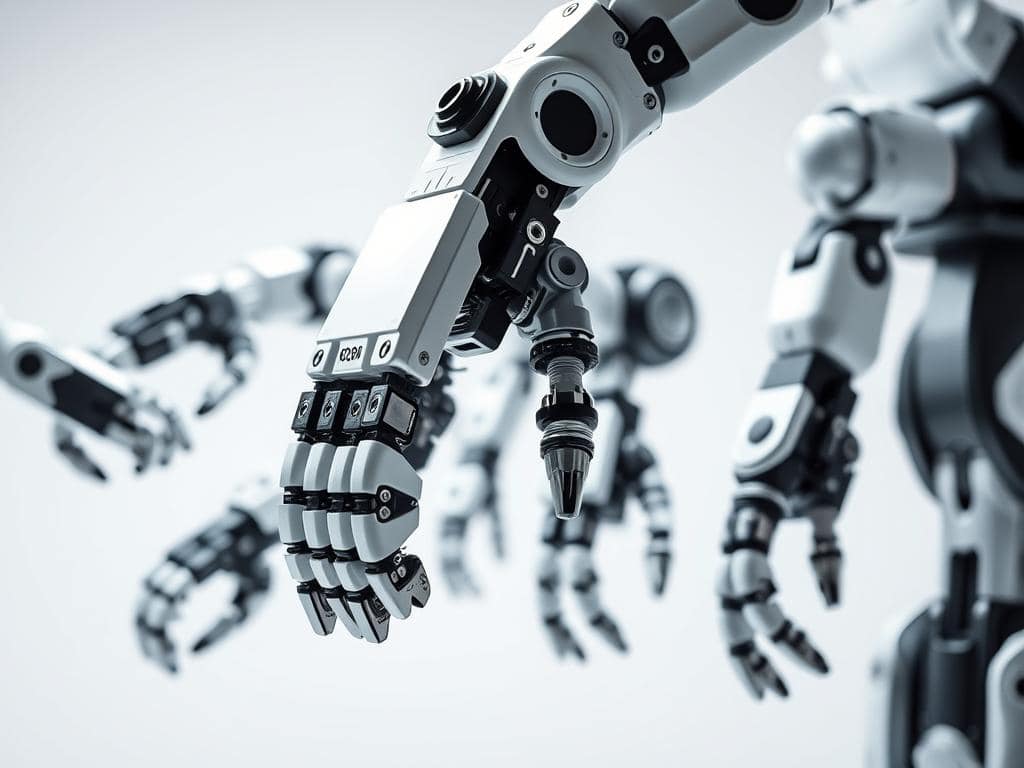
End effectors serve as the interface between a robot and its environment, facilitating interaction and manipulation. They are the tools or devices attached to the end of a robotic arm, designed to perform specific tasks such as gripping, welding, cutting, or assembling components.
Mechanical Grippers
Mechanical grippers are a common type of end effector used in various industrial applications. They can be categorized into friction-based and encompassing jaws. Friction jaws rely on the force of the gripper to hold an object in place using friction, while encompassing jaws cradle the object, using less friction. This versatility allows robots to handle objects of different shapes, sizes, and materials.
Suction-Based End Effectors
Suction-based end effectors utilize vacuum technology to pick up and hold objects with smooth surfaces. Powered by vacuum generators, these devices are simple yet effective in handling large loads, provided the surface is smooth enough to ensure suction. This makes them particularly useful in industrial settings where efficiency and reliability are crucial.
Advanced Humanoid Hands
Advanced humanoid hands represent a significant innovation in end effector design. These hands mimic the dexterity and sensitivity of human hands, featuring multiple joints, tactile sensors, and sophisticated control systems. They enable robots to perform delicate tasks that require precision and a high degree of manipulation.
The choice of end effectors significantly impacts a robot’s functionality and versatility. By selecting the appropriate end effector, robots can be adapted for a wide range of applications, from industrial manufacturing to service and social interactions.
Major Types of Robots
The world of robotics encompasses a diverse range of robots, each designed for specific tasks and environments. As technology advances, the variety of robots continues to grow, catering to different industries and needs.
There are several major categories of robots that are being developed and deployed across various sectors.
Industrial Robots
Industrial robots are designed for manufacturing and production environments. They are known for their precision, speed, and ability to handle repetitive tasks with consistency and without fatigue. These robots dominate manufacturing environments, enhancing productivity and efficiency.
Service and Social Robots
Service robots cater to various sectors, including healthcare, hospitality, and domestic services. These robots interact with humans and assist with everyday tasks, making them invaluable in service-oriented industries.
Medical Robots
Medical robots assist healthcare professionals in various scenarios, supporting the physical and mental health of humans. They are particularly useful in surgeries, rehabilitation, and patient care, emphasizing precision and the ability to perform minimally invasive procedures.
Collaborative Robots (Cobots)
Collaborative robots, or cobots, are designed to work alongside humans in a shared workspace. Unlike traditional industrial robots, cobots have safety features that allow them to operate safely around people, making them ideal for tasks that require human-robot collaboration.
Autonomous Mobile Robots
Autonomous mobile robots can navigate environments independently, performing tasks in dynamic settings. They include warehouse robots, delivery drones, and self-driving vehicles, showcasing their versatility across different applications.
Each type of robot is optimized for specific environments and applications, with design features that reflect their intended use cases. Understanding these different types of robots is crucial for harnessing their potential across various industries.
Robotics Applications Across Industries
Robotics is transforming industries across the globe, bringing about unprecedented efficiency and innovation. The versatility of robots allows them to be adapted to various sectors, each with its unique challenges and requirements.
Manufacturing and Production
In manufacturing, industrial robots handle tasks like spot welding and painting, making for a consistent and precise process. Automated systems are used for assembly, welding, quality control, and packaging, significantly enhancing productivity.
Healthcare and Medicine
Robots in healthcare assist in surgeries, rehabilitation, and patient care. Surgical robots provide precision and control, reducing the risk of complications. They are also used for patient companionship and rehabilitation support.
Agriculture and Farming
Robots are transforming agriculture by automating labor-intensive tasks like planting, harvesting, and monitoring crops. This automation leads to more efficient and sustainable farming practices.
Space Exploration
Robots play a critical role in space exploration, from Mars rovers gathering data to robotic arms on space stations assisting with maintenance and experiments. Their ability to operate in harsh environments makes them invaluable.
Consumer Applications
In retail and e-commerce, robots automate tasks like inventory management, order fulfillment, and customer service. Consumer robots, such as vacuum cleaners and lawn mowers, are becoming increasingly common in homes.
As robotics continues to evolve, its applications across different industries are expected to grow, leading to further innovations and efficiencies.
Artificial Intelligence and Robotics Integration
As AI continues to evolve, its integration with robotics is creating more sophisticated and autonomous systems. The fusion of these technologies is not just enhancing the capabilities of robots but also expanding their applications across various industries.
The evolution of AI has major implications for the future of robotics. In factories, AI can be combined with robotics to produce digital twins and design simulations, helping companies improve their workflows. Advanced AI also gives robots increased autonomy, enabling them to perform complex tasks without human intervention.
Machine Learning in Robotics
Machine learning algorithms enable robots to improve their performance over time through experience, without explicit programming for every possible scenario. This adaptability is crucial for robots operating in dynamic environments.
Computer Vision Applications
Computer vision applications allow robots to “see” and interpret their surroundings, identifying objects, people, and situations with growing accuracy. This capability is vital for tasks that require visual inspection or interaction with the environment.
Natural Language Processing for Human-Robot Interaction
Natural Language Processing (NLP) is revolutionizing human-robot interaction, enabling more intuitive communication through voice commands and conversational interfaces. This advancement is making robots more accessible and user-friendly.
The integration of AI and robotics is pushing robots beyond pre-programmed behaviors toward true adaptability and problem-solving in complex, unpredictable environments. Emerging applications like digital twins and generative AI tools are expanding the capabilities and potential applications of robotic systems.
Challenges in Modern Robotics
As robotics technology advances, it’s crucial to acknowledge the significantchallengesthat the field currently faces. The development and integration ofrobotsinto various industries and aspects of life are not without hurdles.
Technical Limitations
One of the primary challenges in robotics is technical limitations. Robots often struggle with unexpected situations due to their limited problem-solving capabilities compared to humans. Additionally, power constraints, sensor accuracy, and computational demands pose significant technical hurdles. Operating in unstructured or extreme environment and conditions further complicates the functionality of robots.
Ethical Considerations
The advancement of robotics also raises several ethical concerns. Privacy issues arise as robots become more integrated into daily life, potentially infringing on personal privacy. There’s also the concern of job displacement as automation replaces certain job roles. Furthermore, the development of autonomous systems raises questions about decision-making and accountability, as well as the potential need for robot rights.
Safety and Regulatory Issues
As robots become more prevalent, ensuring their safe operation is paramount. This includes establishing physical safety standards and addressing liability questions in the event of accidents or malfunctions. Moreover, there’s a need for consistent regulatory frameworks to govern the development and deployment of robots across different industries and environments.
Addressing these challenges requires a collaborative effort among engineers, ethicists, policymakers, and the public to ensure the responsible advancement of robotics technology.
The Impact of Robotics on the Workforce
With robots becoming more prevalent, understanding their influence on the workforce is crucial. The integration of robotics into various industries is transforming the nature of work and career paths. As we navigate this change, it’s essential to consider both the challenges and opportunities that robots bring to the table.
Job Displacement Concerns
The increasing use of robots and automation in industries such as manufacturing, transportation, and services has raised concerns about job displacement. As robotics advances, tasks traditionally performed by humans are being taken over by machines, potentially leaving some workers without employment. This shift necessitates a closer examination of the sectors most vulnerable to automation.
New Job Creation and Opportunities
While robots may displace certain jobs, they also create new opportunities in fields like robot design, programming, maintenance, and supervision. The emergence of robotics has given rise to entirely new industries and career paths that didn’t exist before. As the industry continues to evolve, we can expect to see more innovative applications of robotics, leading to the creation of new jobs.
Skills Needed in a Robotics-Driven Economy
In a world where robots and humans collaborate, the skills required to succeed in the workforce are changing. There’s a growing need for technical literacy, creative problem-solving, and human-centered skills that robots cannot easily replicate. As we move forward, it’s crucial to focus on education and retraining programs that prepare workers for a robotics-driven economy, ensuring they have the skills necessary to thrive alongside automation.
The Future of Robotics Technology
As we look to the future, robotics technology is poised to revolutionize numerous industries. The advancements in AI and machine learning are driving this revolution, enabling robots to become more sophisticated and autonomous.
The appearance and capabilities of robots are evolving, with humanoid robots designed to interact with humans more effectively. These robots can understand and respond to emotions, navigate environments, and perform tasks that were previously the exclusive domain of humans.
Emerging Trends and Innovations
The field of robotics is witnessing several emerging trends and innovations. Soft robotics, which uses flexible materials, is one such trend. Swarm robotics, where multiple simple robots work together, is another area of development. Biomimetic designs inspired by nature are also being explored.
Innovations in energy efficiency, miniaturization, and materials science are expanding the possibilities in robotics. The integration of advanced AI, including deep learning and reinforcement learning, is enhancing robot autonomy and adaptability.
Predictions for the Next Decade
Over the next decade, we can expect to see significant advancements in robotics automation. Humanoid robots will become more prevalent in service roles, and microscopic robots will be used in medicine. The integration of robotics with other emerging technologies like augmented reality, brain-computer interfaces, and quantum computing will also become more pronounced.
These developments will have major implications for various industries, including manufacturing, healthcare, and logistics. As robotics continues to evolve, it is likely to have a significant impact on how we live, work, and interact with machines, driven by advancements in computer systems and technology.
Conclusion
From simple mechanical devices to sophisticated AI-driven robotic systems, robotics has come a long way. The field has seen significant advancements, transforming the way we work and interact with technology. Robotics has diverse applications across industries, including manufacturing and healthcare.
As robotics continues to evolve, it’s crucial to stay informed about its developments. With its potential to drive efficiency and innovation, robotics will likely become an even more integral part of our technological landscape. I encourage readers to explore this exciting field further.