Imagine stepping into a world that’s entirely created by computers, where you can interact with environments and objects in a way that feels surprisingly real. This is the promise of Virtual Reality (VR), a technology that’s rapidly transforming how we experience entertainment, education, and even communication.
VR is more than just a new gadget; it’s a gateway to new dimensions. By creating immersive, interactive environments, VR technology allows users to engage with digital content in a more intimate way, revolutionizing industries from gaming to training and education.
As VR continues to evolve, its potential to change our daily lives becomes more apparent. In this guide, I’ll walk you through the basics of VR, its applications, and what the future holds for this exciting technology.
Key Takeaways
- Understanding the basics of Virtual Reality and its immersive capabilities
- Exploring the various applications of VR across different industries
- Learning about the potential of VR to transform daily life and interactions
- Gaining insights into the future directions of VR technology
- Discovering the benefits and challenges associated with VR adoption
What Is Virtual Reality?
Imagine stepping into a world that’s entirely digital, yet feels incredibly real – that’s the magic of virtual reality. As we explore this technology, it’s essential to understand its core concepts and how it differs from other related technologies.
Definition and Core Concepts
Virtual reality (VR) is a simulated experience that uses 3D near-eye displays and pose tracking to give the user an immersive feel of a virtual world. This technology creates computer-generated environments that users can interact with, providing a sense of presence in a virtual environment. The core concept of VR revolves around immersion, achieved through sensory stimulation that tricks the brain into perceiving digital environments as real.
At its core, VR is about creating a believable and interactive environment that simulates real-world experiences or creates entirely new ones. This is made possible through advancements in computer science and technology, enabling the development of sophisticated VR systems.
The Reality-Virtuality Continuum
The reality-virtuality continuum is a concept in computer science that describes a spectrum ranging from the completely real (reality) to the completely virtual (virtual reality). This continuum helps in understanding how different technologies, including augmented reality and mixed reality, fit into the broader context of reality and virtuality.
Understanding the reality-virtuality continuum is crucial for appreciating how VR fits into the larger landscape of immersive technologies. It clarifies the differences between VR and other related concepts, providing a clearer picture of its unique capabilities and applications.
The Evolution of Virtual Reality
The history of virtual reality is a rich tapestry woven from technological innovation and artistic vision. As I explore the development of this immersive technology, it becomes clear that its evolution has been shaped by numerous factors over the years.
Early Precursors
The concept of reality manipulation dates back to the mid-20th century. Morton Heilig wrote about an “Experience Theatre” in the 1950s, which could effectively encompass all senses, drawing viewers into on-screen activities. He built a prototype called Sensorama in 1962, a significant step in the development of virtual reality. Ivan Sutherland created the first head-mounted display system in 1968, known as the “Sword of Damocles,” marking a crucial milestone in the technology behind VR.
The First Wave
The 1980s and 1990s saw the first commercial wave of virtual reality with the introduction of consumer headsets. Pioneers like VPL Research played a significant role in this era. However, despite the excitement, mainstream adoption was limited due to various challenges, including high costs and computer hardware limitations. The concept of reality was being redefined, but the systems were not yet mature.
Modern Renaissance
The modern renaissance of virtual reality began around 2010 with Palmer Luckey’s prototype of the Oculus Rift. This was a significant time for VR, as it marked the beginning of a new era with improved headset designs and more sophisticated technology. Facebook’s acquisition of Oculus VR in 2014 further accelerated the development of VR, pushing the boundaries of what is possible in reality simulation.
Today, virtual reality is more accessible and sophisticated, with applications across various industries. The evolution of VR continues, driven by advancements in technology and our understanding of how to create immersive experiences that simulate reality.
How Virtual Reality Technology Works
At its heart, virtual reality technology is about creating a believable and interactive digital world. This is achieved through a combination of advanced hardware and software components that work together to simulate an immersive experience.
Creating Immersive Environments
Virtual reality systems generate stereoscopic 3D environments that create depth perception by displaying slightly different images for each eye. This technology tricks the brain into perceiving depth, making the virtual world feel more realistic. The quality of this experience is influenced by factors such as latency, refresh rates, and field of view. For instance, low latency is crucial to prevent motion sickness, while high refresh rates ensure a smoother experience. A wider field of view also enhances the sense of immersion, making the virtual environment feel more expansive.
As I delve deeper into the technology, it becomes clear that creating convincing immersive environments is a complex task. It involves not just visual feedback but also auditory and, increasingly, other types of sensory feedback through haptic technology. The goal is to simulate a fully immersive experience that engages the user on multiple levels.
Tracking and Input Systems
To achieve immersion, VR systems rely on position tracking technologies that monitor a user’s movements in real space and translate them into the virtual environment. This is made possible by sensors and cameras that track the user’s head, hands, and sometimes even their entire body. Input systems, such as motion controllers and data gloves, allow users to interact with virtual objects in a natural way, further enhancing the sense of presence in the virtual world.
The integration of these tracking and input systems is crucial for a seamless VR experience. As
“The future of virtual reality is not just about the technology itself, but how it enables us to interact with information and each other in new and innovative ways.”
This highlights the importance of developing intuitive and responsive interaction methods that make the virtual reality feel more real and engaging.
By combining advanced tracking and input systems with high-quality immersive environments, virtual reality technology is poised to revolutionize various fields, from entertainment and education to healthcare and beyond.
Types of Virtual Reality Systems
I will explore the various types of virtual reality systems, each offering a unique level of immersion and interaction. The categorization of these systems is primarily based on their level of immersion, which determines how deeply a user can engage with the virtual environment.
Non-Immersive VR
Non-immersive VR systems provide a computer-generated experience through a standard display without the need for specialized equipment. This type of VR is often used in applications where a simple 3D visualization is sufficient, such as in some educational or training programs. The user interacts with the virtual world using conventional input devices like keyboards and mice.
Semi-Immersive VR
Semi-immersive VR offers a more engaging experience than non-immersive VR by utilizing larger displays or projection systems. It may also include specialized input devices to enhance interaction with the virtual environments. However, it does not completely immerse the user in the virtual world.
Fully Immersive VR
Fully immersive virtual reality systems completely replace the user’s sensory input with virtual stimuli, creating a highly realistic and interactive environment. This is achieved through the use of head-mounted displays (HMDs) and comprehensive tracking systems that monitor the user’s movements. Fully immersive VR provides the most realistic simulation of the three types, making it ideal for applications that require a high level of presence, such as in gaming, training simulations, and therapy.
In conclusion, the choice of VR system depends on the specific requirements of the application, including the level of immersion needed, the type of interaction desired, and the available technology. Understanding the differences between non-immersive, semi-immersive, and fully immersive virtual reality systems is crucial for selecting the most appropriate technology for a given use case.
Essential Components of VR Systems
Understanding the core components of Virtual Reality (VR) systems is crucial for appreciating the technology’s capabilities. VR systems are complex and consist of multiple elements that work together to create an immersive experience.
Hardware Components
The hardware components of VR systems are the physical devices that enable users to interact with virtual environments. These include headsets, controllers, and tracking systems.
Headsets and Displays
VR headsets are perhaps the most recognizable component of VR systems. They house the displays that present the virtual environment to the user. Modern VR headsets utilize technologies like OLED or LCD screens, and Fresnel lenses to enhance the visual experience. The field of view is also a critical consideration in headset design, as it affects the level of immersion.
Controllers and input devices allow users to interact with virtual environments. These can range from simple handheld controllers to sophisticated data gloves that track finger movements. The design of these devices is crucial for creating a seamless and intuitive user experience.
Tracking Systems
Tracking systems are responsible for monitoring the user’s movements and adjusting the virtual environment accordingly. There are two primary types of tracking methods: inside-out and outside-in tracking. These technologies enable precise movement tracking, which is essential for a convincing VR experience.
Software Components
The software components of VR systems are equally important, as they create the virtual worlds that users interact with. This includes rendering engines, physics simulations, and spatial audio processing. These software elements work together to generate convincing and immersive virtual environments. The computer system that runs the VR software is also critical, as it must process complex graphics and sensory inputs in real-time.
In conclusion, the essential components of VR systems work together to create an immersive and interactive experience. By understanding these components, users can better appreciate the complexity and potential of virtual reality technology.
Popular Virtual Reality Headsets
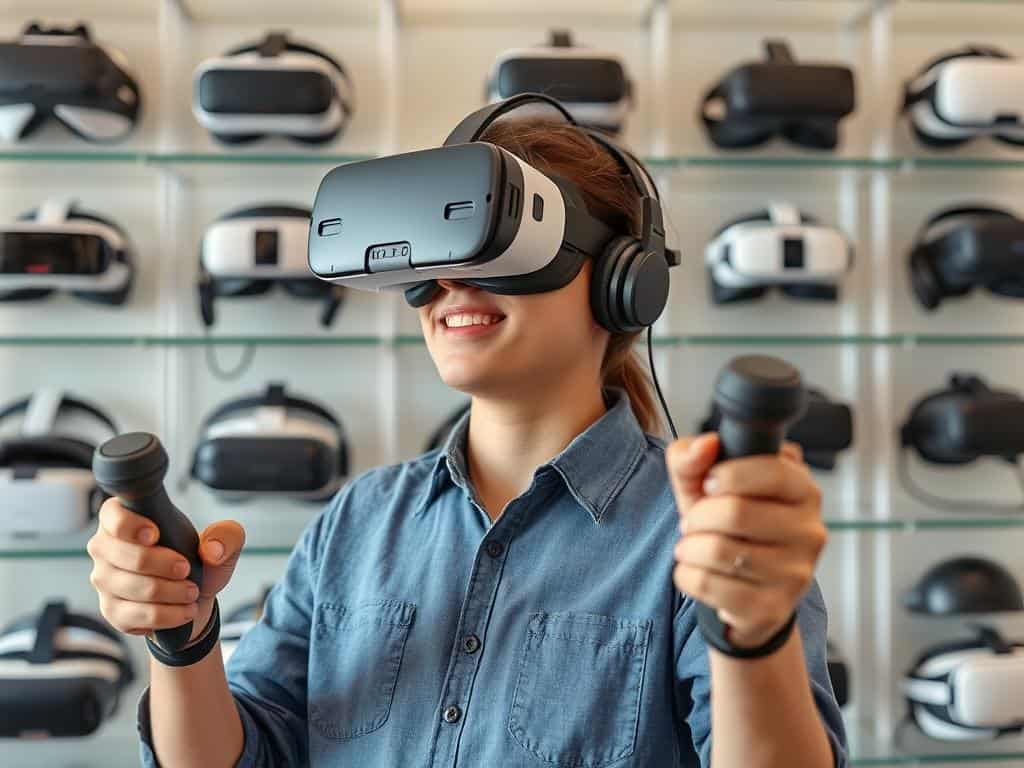
The virtual reality landscape is dominated by a range of headsets, each designed to provide an immersive experience. As I explore the most popular and influential VR headsets currently on the market, I’ll compare their features, specifications, and target audiences.
Meta Quest2
The Meta Quest2, formerly known as Oculus Quest2, is a standalone VR headset that has achieved significant market success. In 2021, it accounted for 80% of all VR headsets sold. Its accessibility and ease of use make it an attractive option for users.
Valve Index
The Valve Index is a premium PC-based VR system that boasts advanced features such as finger tracking and high-fidelity displays. Its 130° field of view and off-ear headphones provide an immersive experience. The open-handed controllers allow for individual finger tracking, making it a popular choice among VR enthusiasts.
PlayStation VR
PlayStation VR is Sony’s virtual reality headset designed for the PlayStation console. It brings virtual reality gaming to PlayStation users, offering an immersive experience. While it’s not as advanced as some PC-based VR systems, it’s an affordable and accessible option for console gamers.
HTC Vive
The HTC Vive is a VR headset developed by HTC and Valve, utilizing Lighthouse tracking technology. The original Vive has evolved into more recent models, offering room-scale tracking capabilities. It’s a popular choice among VR developers and enthusiasts who require advanced tracking features.
In conclusion, these popular VR headsets offer a range of experiences for users, from standalone and console-based solutions to premium PC-based systems. As virtual reality technology continues to advance, we can expect even more innovative headsets to emerge.
Virtual Reality vs. Augmented Reality vs. Mixed Reality
As technology advances, understanding the differences between virtual reality, augmented reality, and mixed reality becomes increasingly important. These technologies are often used interchangeably, but they have distinct applications and functionalities that set them apart.
Key Differences and Similarities
Virtual reality (VR) creates a completely immersive digital environment that replaces the real world. In contrast, augmented reality (AR) adds digital elements to the real world, enhancing it without replacing it. Mixed reality (MR) combines elements of both, overlaying digital objects onto the real world while allowing interaction with virtual elements.
While VR is typically used in industries like healthcare, architecture, and education, AR is often applied in fields such as advertising, retail, and gaming. MR, being a more recent development, is being explored across various sectors for its potential to blend the physical and digital seamlessly.
When to Use Each Technology
The choice between VR, AR, and MR depends on the specific applications and the desired user experience. For training simulations that require a fully controlled environment, VR is often the best choice. For enhancing the real world with additional information or entertainment, AR is more suitable. MR is ideal for scenarios where interaction between the physical and digital is necessary.
Understanding these differences is crucial for businesses and individuals looking to leverage these technologies effectively. By choosing the right reality technology, one can create more engaging, informative, and interactive experiences.
Applications of Virtual Reality
Virtual reality is transforming numerous industries with its diverse and expanding applications. As VR technology advances, it’s becoming increasingly integral to various sectors, enhancing experiences and improving outcomes.
Gaming and Entertainment
The gaming and entertainment industries are among the most significant adopters of VR technology. VR provides immersive experiences that simulate environments, allowing users to engage with virtual worlds in unprecedented ways. From interactive video games to virtual concerts and cinematic experiences, VR is revolutionizing entertainment.
For instance, VR gaming allows players to step into the game, enhancing the sense of presence and interaction. This immersive quality is also being utilized in virtual events and experiences, offering new ways for audiences to engage with content.
Education and Training
In the field of education, VR is being used to create interactive and engaging learning experiences. Students can participate in virtual field trips, explore historical sites, or engage in complex scientific simulations, making learning more immersive and effective.
VR is also being used for training purposes, allowing individuals to practice skills in a safe and controlled environment. This is particularly valuable in fields such as medicine, where simulations can be used to train professionals without risking patient safety.
Healthcare and Therapy
The healthcare sector is leveraging VR for various applications, including simulation-based training for medical professionals. VR can also be used for pain management, exposure therapy, and rehabilitation, providing patients with controlled and safe environments to address their health needs.
For example, VR exposure therapy can help individuals overcome phobias or anxiety disorders by gradually exposing them to the feared situations in a controlled manner.
Business and Professional Applications
In the business world, VR is being adopted for virtual meetings, architectural visualization, and product design. Companies can use VR to create immersive product demonstrations, enhance collaboration among remote teams, and provide virtual tours of properties.
This technology is also enhancing professional training by allowing for realistic simulations of work environments, reducing the need for physical prototypes and minimizing risks associated with training in real-world settings.
VR Software and Development Platforms

The virtual reality ecosystem is heavily dependent on advanced software solutions for content creation and delivery. As VR continues to evolve, the importance of robust development platforms becomes increasingly evident.
To create immersive VR experiences, developers rely on a variety of software tools. These range from game engines that provide the foundational framework for VR applications to specialized content creation tools that enable the design of intricate virtual environments.
Game Engines for VR
Game engines are crucial for VR development, offering the necessary infrastructure to build and deploy VR applications. Popular game engines like Unity and Unreal Engine have become industry standards, providing extensive features, workflows, and relative strengths that cater to different development needs.
Content Creation Tools
Beyond game engines, specialized VR content creation tools play a vital role in enabling developers and designers to craft immersive experiences. These tools often feature intuitive interfaces that allow for the creation of complex virtual environments without requiring extensive programming knowledge.
Additionally, 3D modeling and animation software integrates with VR development workflows, enhancing the ability to create detailed and interactive virtual environments.
Technical considerations are also paramount in VR software development. Factors such as performance optimization and user experience design are critical to ensuring that VR applications are both engaging and functional.
Benefits of Virtual Reality
One of the most significant advantages of virtual reality is its ability to create immersive and interactive environments that can simulate real-world experiences.
In the field of education, virtual reality can be used to provide students with hands-on experiences that would otherwise be too difficult, expensive, or dangerous to replicate in real life. This can lead to improved knowledge retention and a deeper understanding of complex concepts.
Immersive Learning Experiences
Virtual reality creates immersive learning experiences that engage multiple senses, improving knowledge retention for students and trainees. By simulating real-world environments, VR enables learners to practice and apply their skills in a safe and controlled setting.
Remote Collaboration
Virtual reality also enables remote collaboration, allowing teams to work together in shared virtual spaces regardless of physical location. This can enhance teamwork, productivity, and communication among team members.
Safe Training Environments
Furthermore, virtual reality provides safe training environments for high-risk professions like surgery, emergency response, and industrial operations. By simulating hazardous scenarios, VR helps trainees develop critical skills without exposing themselves or others to danger.
Additional benefits of virtual reality include cost savings, accessibility to otherwise impossible experiences, and the ability to visualize complex data or concepts. As VR technology continues to evolve, its potential applications are likely to expand across various industries, enhancing the way we learn, work, and interact.
Challenges and Limitations of VR
As we dive deeper into the world of virtual reality, we encounter several challenges that hinder its widespread adoption. Despite its many benefits, VR technology is not without its drawbacks.
Technical Challenges
One of the significant hurdles is the technical challenge posed by VR. The need for sufficient computing power and memory to create an immersive environment is paramount. Hardware limitations, such as those related to the headset and tracking systems, can significantly impact the user experience. Moreover, the development of VR content is complex and requires specialized skills and resources.
Physical and Health Concerns
Another concern is the potential for VR to cause physical and health issues, including motion sickness. Some users may experience discomfort, eye strain, or other adverse effects, particularly if they are prone to these conditions. Ensuring that VR systems are designed with user health in mind is crucial.
Cost and Accessibility Issues
The cost of VR equipment and data-intensive applications can be prohibitive for many individuals and organizations, limiting its reality for widespread adoption. Addressing these cost and accessibility barriers is essential for making VR more inclusive and widely available.
In conclusion, while virtual reality has made significant strides, it still faces several challenges that need to be addressed to enhance its adoption and usability.
The User Experience in Virtual Reality
The success of virtual reality hinges on its ability to provide a seamless and comfortable user experience. As VR technology continues to evolve, understanding the factors that contribute to a positive experience is crucial.
Comfort and Ergonomics
The design of VR hardware, particularly the headset, plays a significant role in user comfort. Factors such as weight distribution, ventilation, and adjustability are crucial in ensuring that users can enjoy extended sessions without discomfort. A well-designed headset can significantly enhance the overall user experience by reducing fatigue and allowing users to fully immerse themselves in virtual reality.
Motion Sickness and How to Prevent It
Motion sickness is a common issue in VR, caused by a disconnect between what the user sees and what their body feels. To mitigate this, developers can implement technical solutions such as reducing latency and improving frame rates. Users can also take steps to prevent motion sickness by taking regular breaks and gradually increasing their exposure to VR environments over time. By understanding the causes of motion sickness and implementing these strategies, users can enjoy a more comfortable and immersive experience in reality.
The Future of Virtual Reality
As we look ahead, virtual reality is set to revolutionize numerous aspects of our lives. The reality of VR’s potential is becoming increasingly evident as technology advances.
Emerging Technologies
The VR field is witnessing significant advancements, including improvements in display resolution, wireless capabilities, haptic feedback, and eye tracking. These emerging technologies are enhancing the VR experience, making it more immersive and interactive for users. The integration of VR with other technologies like artificial intelligence and brain-computer interfaces is also on the horizon, promising to further expand the potential of VR.
The development of more sophisticated VR headsets is crucial for the industry‘s growth. These advancements will enable more realistic and engaging experiences, driving adoption across various sectors.
Predicted Trends and Developments
Looking ahead, we can expect several key trends to shape the future of virtual reality. Increased social interaction, photorealistic rendering, and expanded sensory feedback are likely to become more prevalent. The convergence of VR with other technologies like 5G networks and cloud computing will create new capabilities, enabling more seamless and data-intensive experiences. As VR continues to evolve, it is expected to transform how we work, learn, socialize, and entertain ourselves in the coming decades, changing our world in profound ways.
The analysis of data from VR users will play a crucial role in shaping the development of future VR systems, ensuring they meet the needs of their users and provide valuable insights across various industry sectors.
Getting Started with Virtual Reality
Embarking on your virtual reality journey requires careful consideration of several key factors. As you begin to explore this immersive technology, understanding the different components and how they work together is crucial.
Choosing Your First VR System
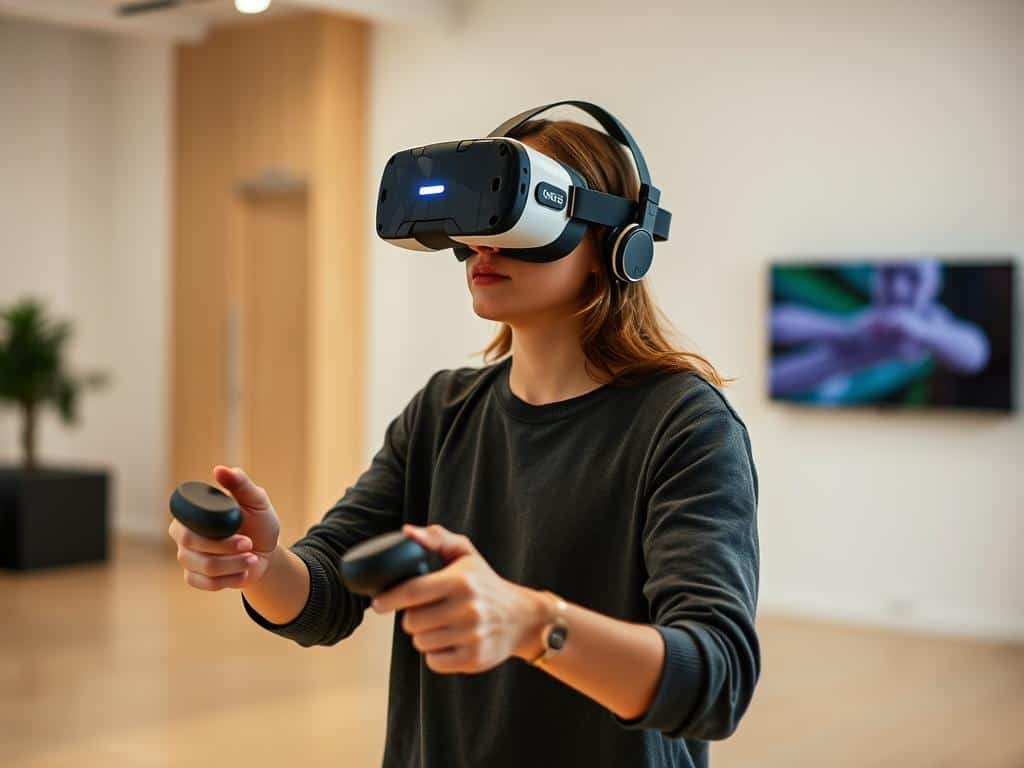
Selecting your first VR system involves evaluating your budget, the technical requirements of the hardware and software, the available content, and your intended use cases. For instance, if you’re interested in gaming, you’ll want a headset that’s compatible with your computer or gaming console.
Entry-level options like smartphone-based VR offer an affordable introduction, while mid-range standalone headsets provide a balance between cost and performance. High-end PC-connected systems, on the other hand, offer the most immersive experience but require a significant investment in both the headset and the hardware needed to run it.
Essential Accessories and Setup Tips
To enhance your VR experience, consider investing in essential accessories such as controller upgrades and comfort modifications. Setting up your VR system correctly is also crucial for an optimal experience. This includes configuring your play area, adjusting lighting to avoid glare on the headset, and ensuring your devices are properly connected.
Additionally, safety precautions should not be overlooked. Clearing the room of obstacles, ensuring users are aware of their surroundings, and taking regular breaks can help prevent accidents and reduce the risk of users experiencing discomfort or motion sickness.
Conclusion
Having delved into the depths of virtual reality, we can appreciate its capacity to bridge the gap between the physical and virtual worlds. Throughout this comprehensive guide, we’ve explored the various facets of VR, from its definition and evolution to its applications across different industries.
The technology has shown immense potential in transforming how we interact with digital information and with each other. By providing immersive experiences in a controlled environment, VR enables users to learn, practice, and explore in ways that were previously unimaginable.
VR’s diverse applications in fields such as gaming, education, healthcare, and business underscore its versatility and the unique benefits it offers compared to traditional media. For instance, in education, VR can create interactive simulations that enhance learning outcomes. In healthcare, it can be used for therapy and treatment of certain conditions.
While there are challenges to be addressed, including technical issues, physical and health concerns, and cost and accessibility barriers, the rapid pace of innovation in the field is promising. As technology continues to evolve, we can expect to see more sophisticated VR systems and applications that further enrich our interaction with the world around us.
To stay informed about VR developments and potentially incorporate this technology into your own life or business, it’s essential to follow industry updates and explore the various VR headsets and platforms available. By doing so, you’ll be well-positioned to harness the potential of virtual reality and be part of shaping its future applications across different industries.